What is DR ABC?
What is DR ABC?
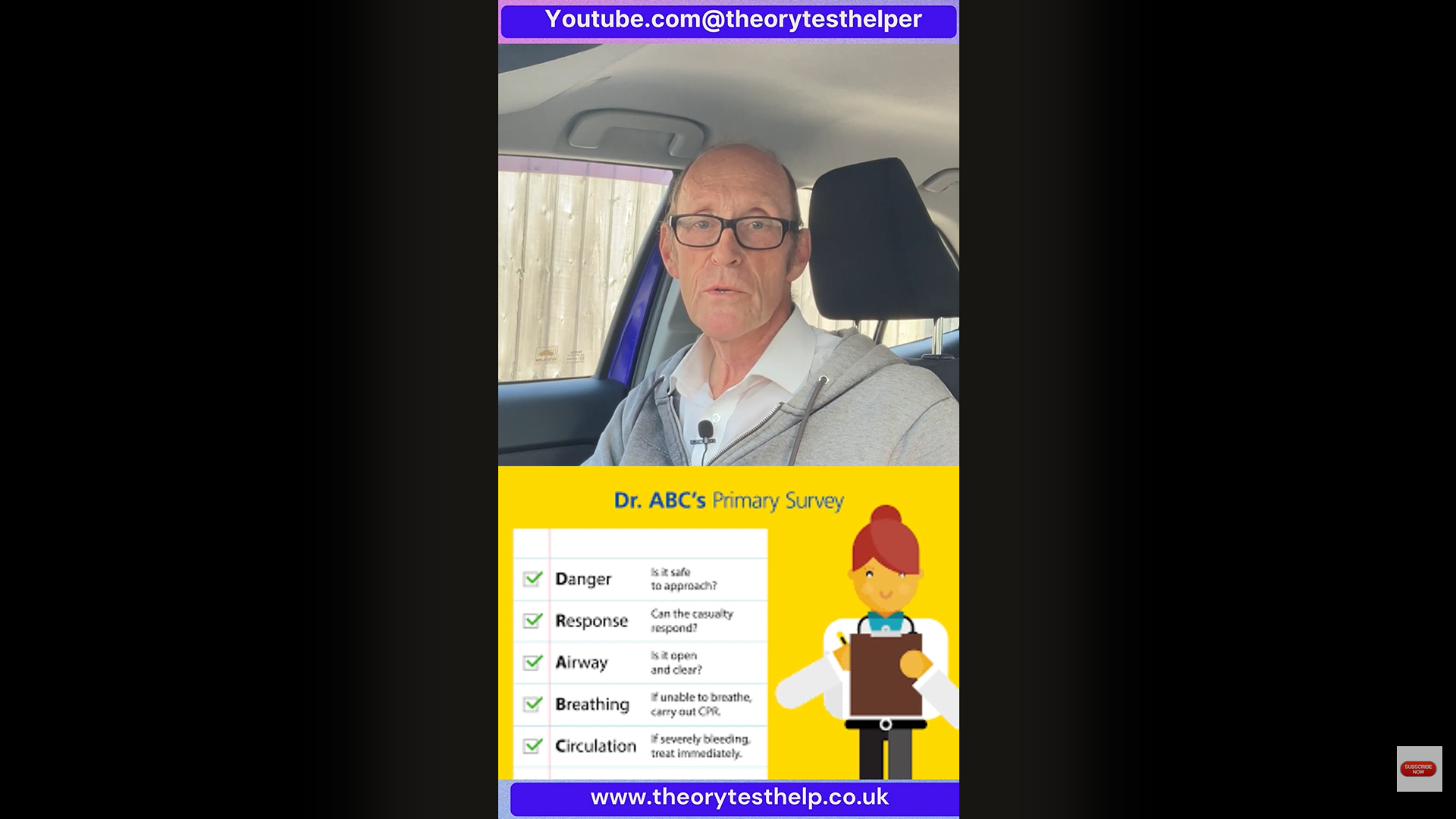

ADI Theory Test – What is DR ABC?
DR ABC – Explained
DR ABC
When you arrive at the scene of a collision, your first priority is to keep everyone safe and give help if needed.
The DVSA expects learners to know basic first-aid steps, but not to act like a paramedic.
Here’s the simple version for driving theory test learners:
D – Danger
Before you do anything, check for danger.
Switch off your engine, put on hazard warning lights, and keep yourself safe from traffic, fire, or broken glass.
Never put yourself at risk – you can’t help anyone if you become another casualty.
R – Response
Check if the injured person is conscious.
Gently ask, “Are you alright?”
If they don’t respond, they may need urgent help.
A – Airway
Make sure their airway is clear.
If they are unconscious, gently tilt their head back and lift the chin – this stops the tongue blocking the airway.
DR ABC
B – Breathing
Look, listen and feel for breathing for up to 10 seconds.
Look for chest movement
Listen for breathing sounds
Feel for breath on your cheek
C – Circulation (or CPR if not breathing)
If they are not breathing normally, call 999 immediately.
Begin CPR:
30 chest compressions (in the centre of the chest)
2 rescue breaths (if trained and confident)
If not confident, just keep going with chest compressions until help arrives.
Extra points for the Driving Theory Test:
Always call 999 as soon as possible.
Don’t move a casualty unless they are in immediate danger (e.g. car fire).
If a motorcyclist is involved, do not remove their helmet unless it’s essential to keep their airway open.
Keep the casualty warm and calm until help arrives.
This way, DR ABC gives learners a step-by-step plan that’s easy to remember under stress, while fitting neatly into what the DVSA expects.