What is the stopping distance at 50 mph?
Theory Help - Youtube - Books
What Is the Stopping Distance at 50 mph?
What Is the Stopping Distance at 50 mph?
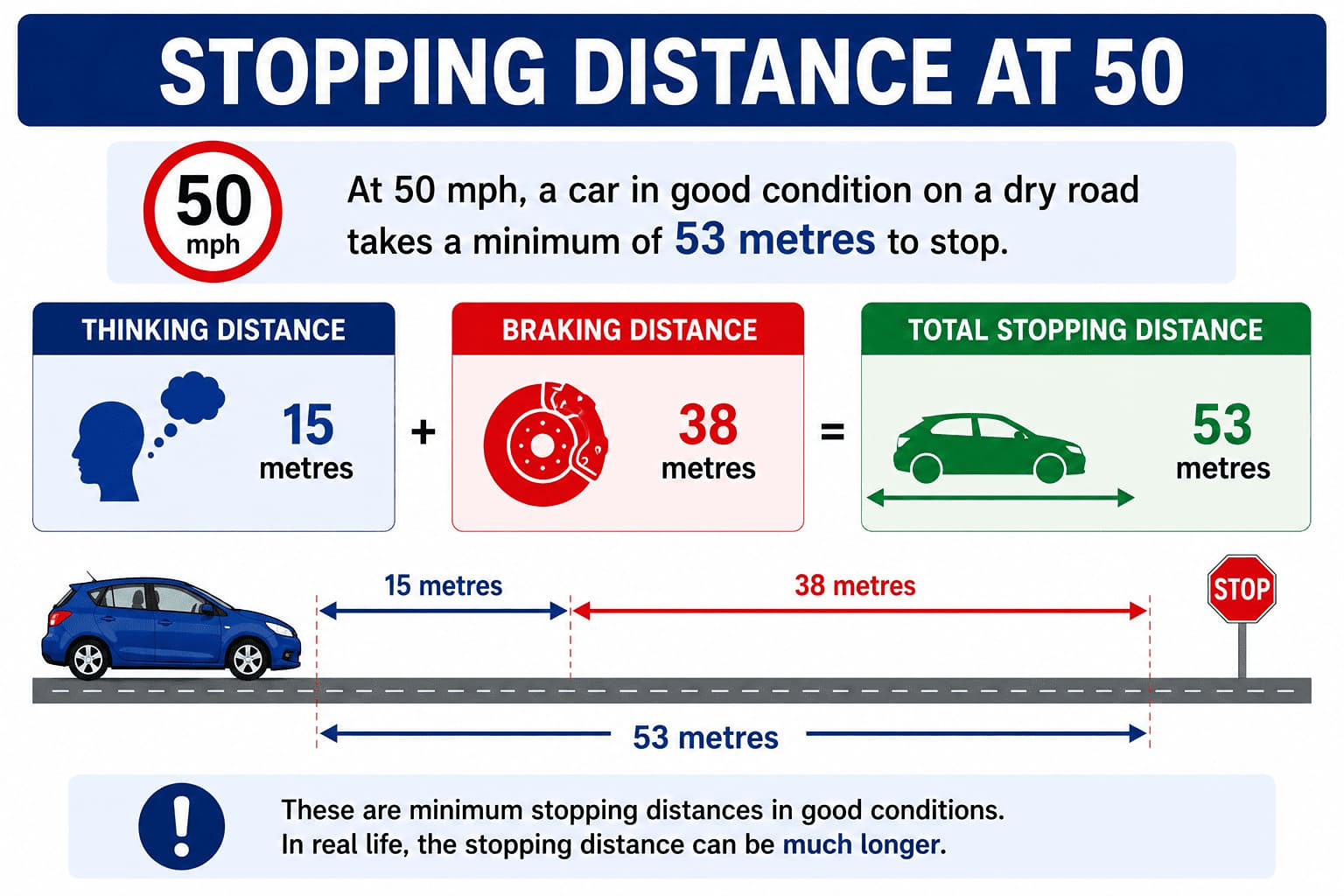
If you're travelling at 50 mph, the official Highway Code stopping distance is 53 metres. That combines:
Thinking distance: 15 metres
Braking distance: 38 metres
Total stopping distance: 53 metres
These figures assume you're driving a well-maintained vehicle on a dry road, with good tyres and brakes, and that you're alert and react promptly.
How Far Is 53 Metres?
How Far Is 53 Metres?
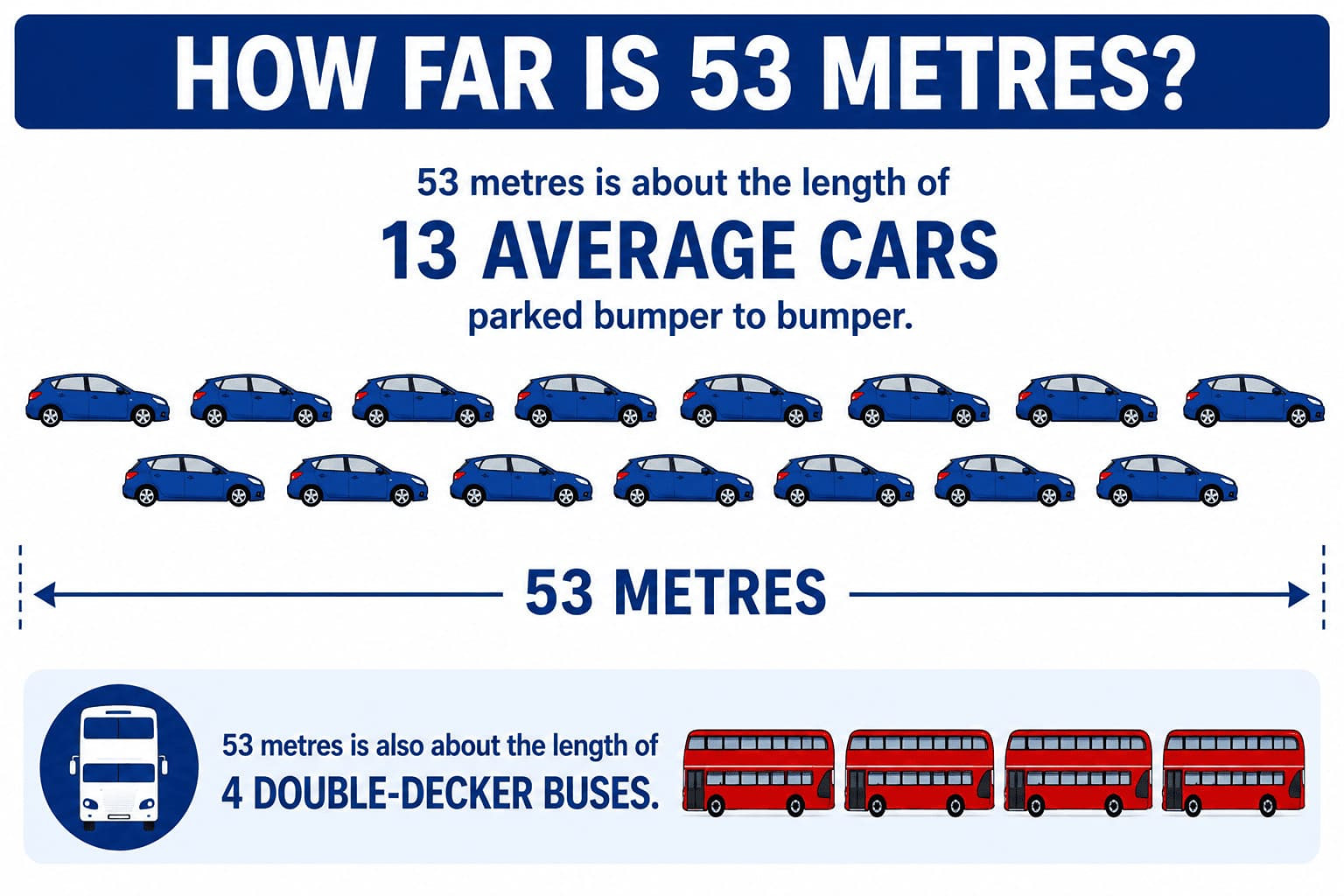
Fifty-three metres is much farther than most drivers expect. It's roughly:
About the length of 13 average family cars parked bumper to bumper.
Around the length of 4 double-decker buses.
At 50 mph, your vehicle is covering the length of a football pitch in just a few seconds, so even a small delay in reacting can have serious consequences.

Why Is the Stopping Distance So Much Longer?
Why Is the Stopping Distance So Much Longer?
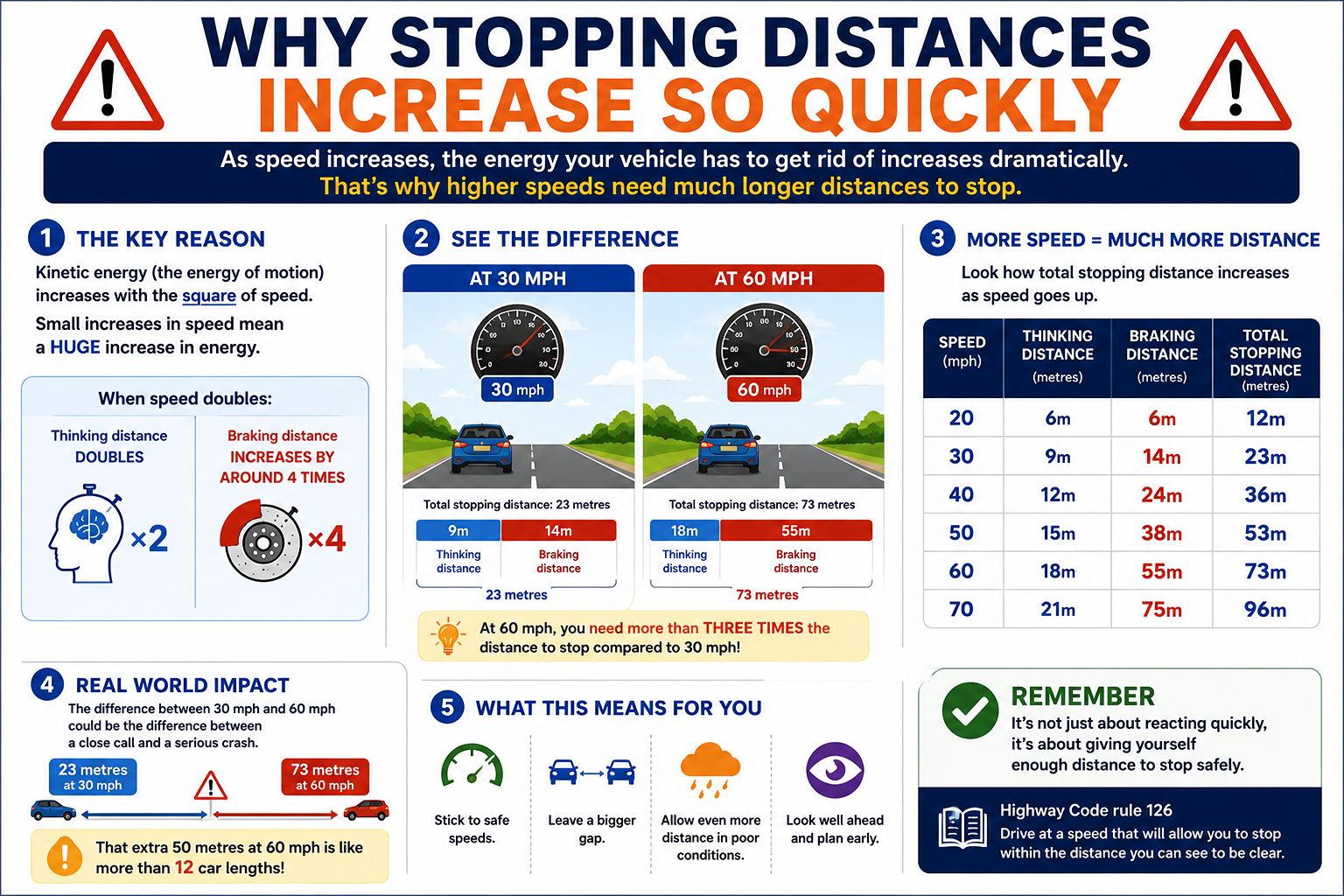
Many drivers are surprised by how quickly stopping distances increase as speed rises.
While your thinking distance increases steadily with speed, your braking distance increases much more rapidly because your vehicle has far more energy to lose before it can stop. At 50 mph, the braking distance alone is 38 metres—well over twice the thinking distance.
This is why reducing your speed by just a few miles per hour can make a significant difference to how quickly you can stop.
Can stopping distances be longer?
When Can It Be Longer?
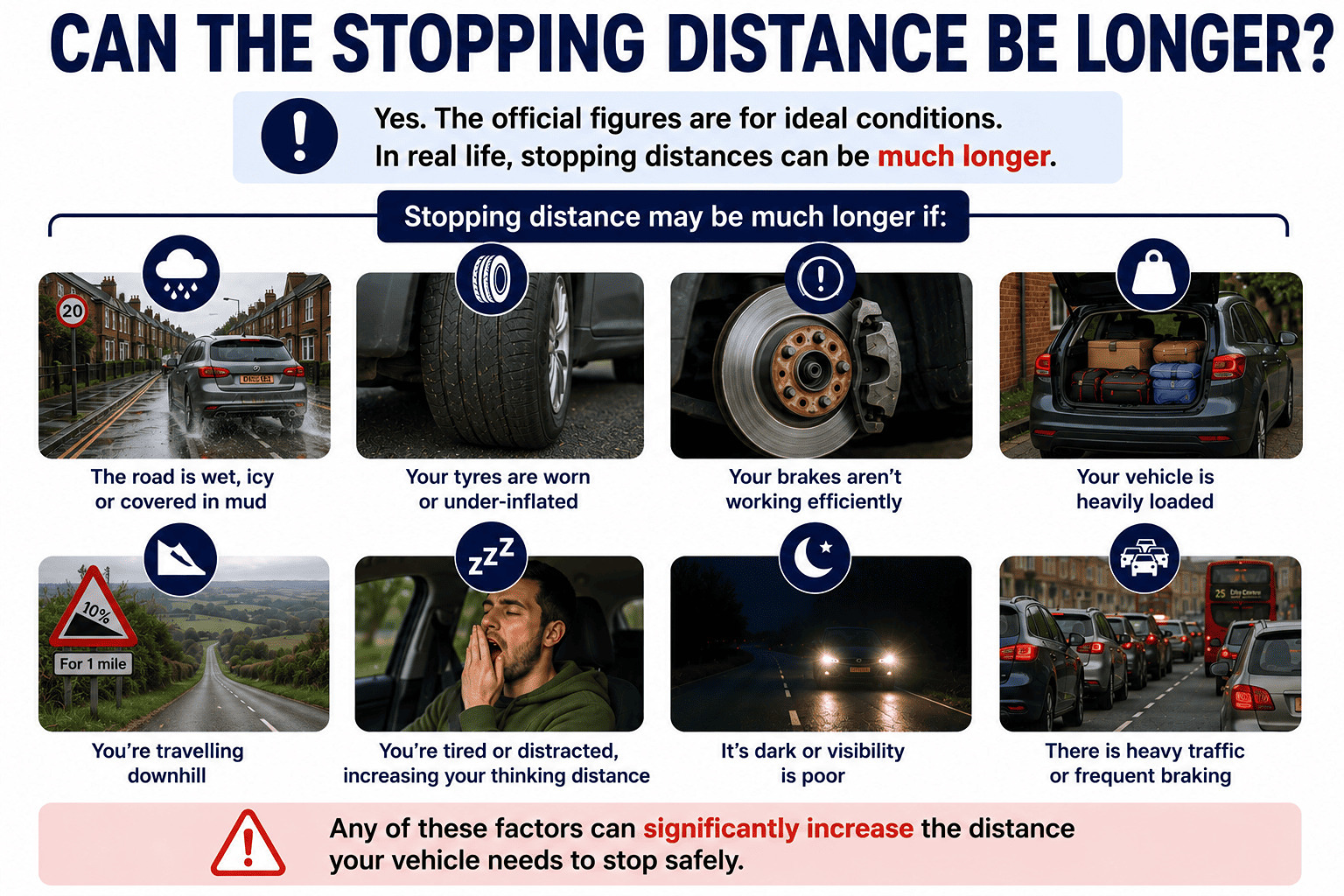
The Highway Code figures are minimum stopping distances in ideal conditions. In everyday driving, you may need much more than 53 metres if:
The road is wet or icy.
Your tyres are worn or under-inflated.
Your brakes aren't working efficiently.
Your vehicle is heavily loaded.
You're travelling downhill.
You're tired, distracted or slow to react.
Any of these factors can significantly increase the distance needed to stop safely.
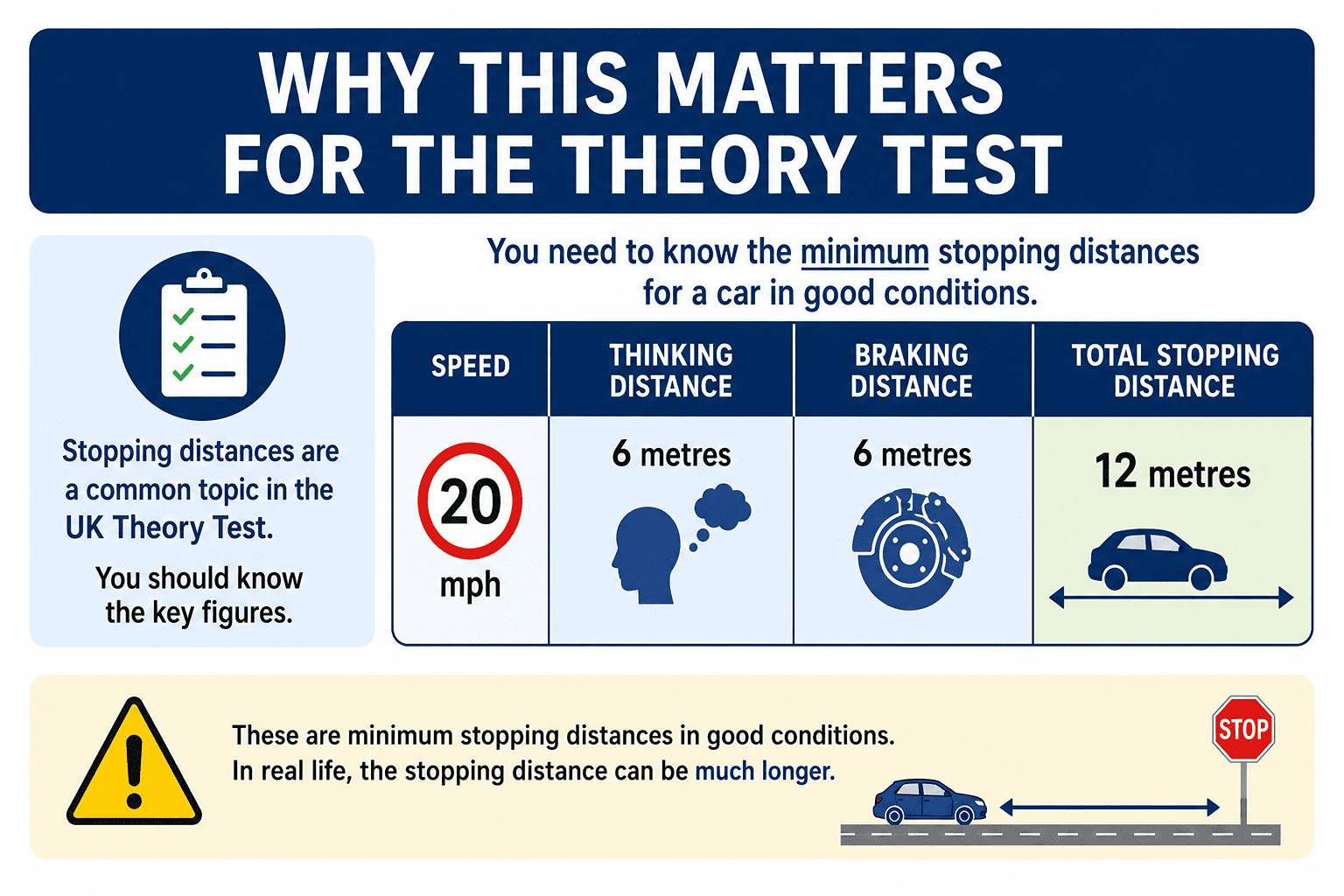
Why This Matters for the theory test
Why This Matters
Fifty miles per hour is a common speed limit on rural roads, dual carriageways and some urban routes. At this speed, hazards can appear quickly, from slow-moving vehicles and sharp bends to junctions, cyclists and pedestrians.
Understanding that it takes 53 metres to stop helps you appreciate why leaving a safe following distance is essential. It gives you the time and space needed to react if the vehicle ahead brakes suddenly.