Theory Test questions Explained - What is Thinking Distance?
THEORY HELP - YOUTUBE - BOOKS
What Is Thinking Distance?
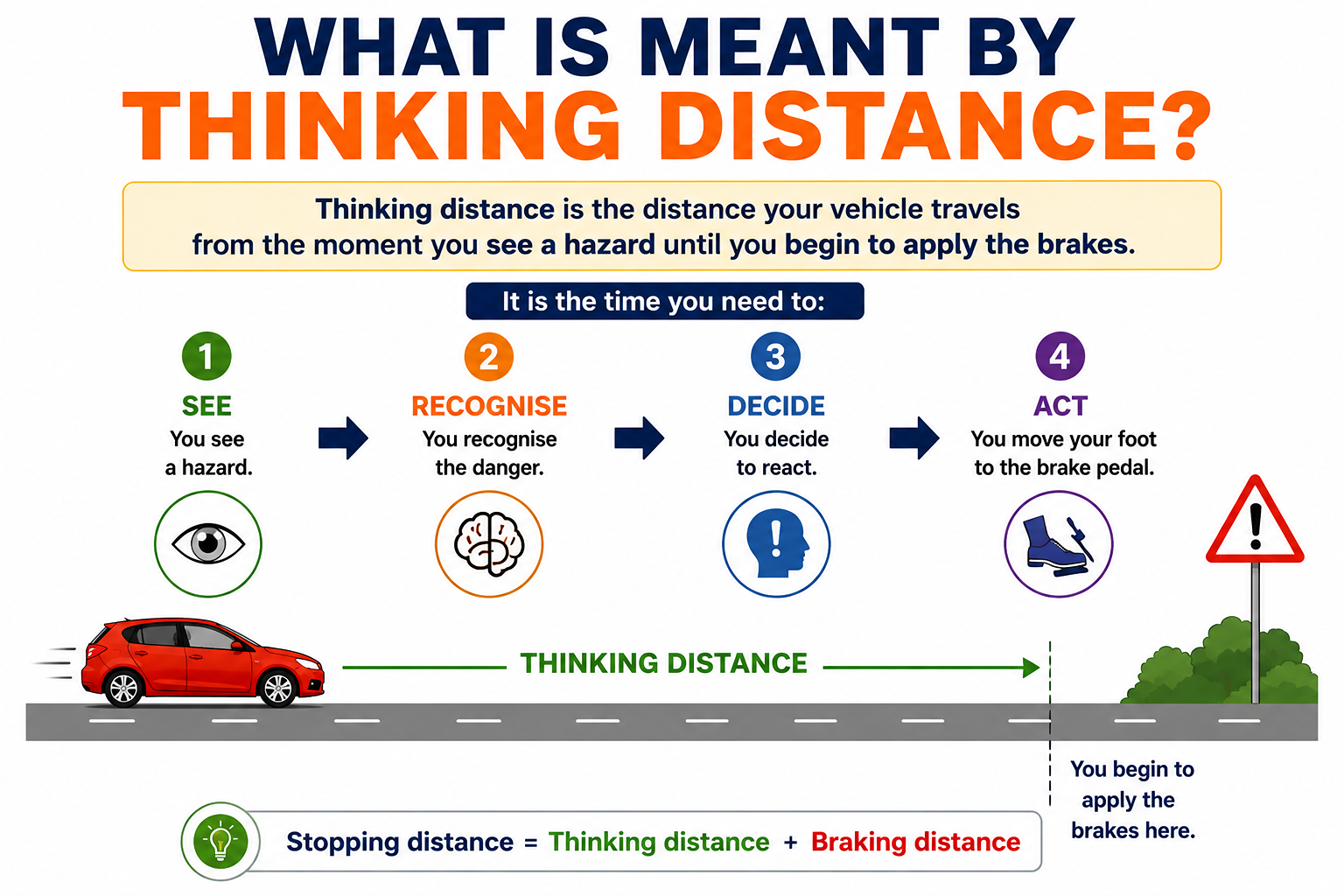
Thinking distance is the distance a vehicle travels between the driver seeing a hazard and applying the brakes.
In simple terms, it is the distance travelled while you are thinking and reacting.
How Does Thinking Distance Work?
How Does Thinking Distance Work?
When a hazard appears, your brain must:
See the hazard
Recognise the danger
Decide what to do
Move your foot to the brake pedal
During this time, the vehicle continues moving.
This distance is known as the thinking distance.

Thinking Distance example
Example
Imagine a child runs into the road ahead.
You do not stop instantly.
First, you must:
Notice the child
Decide to brake
Move your foot onto the brake pedal
During those few moments, the vehicle keeps travelling.
Thinking Distances in Driving
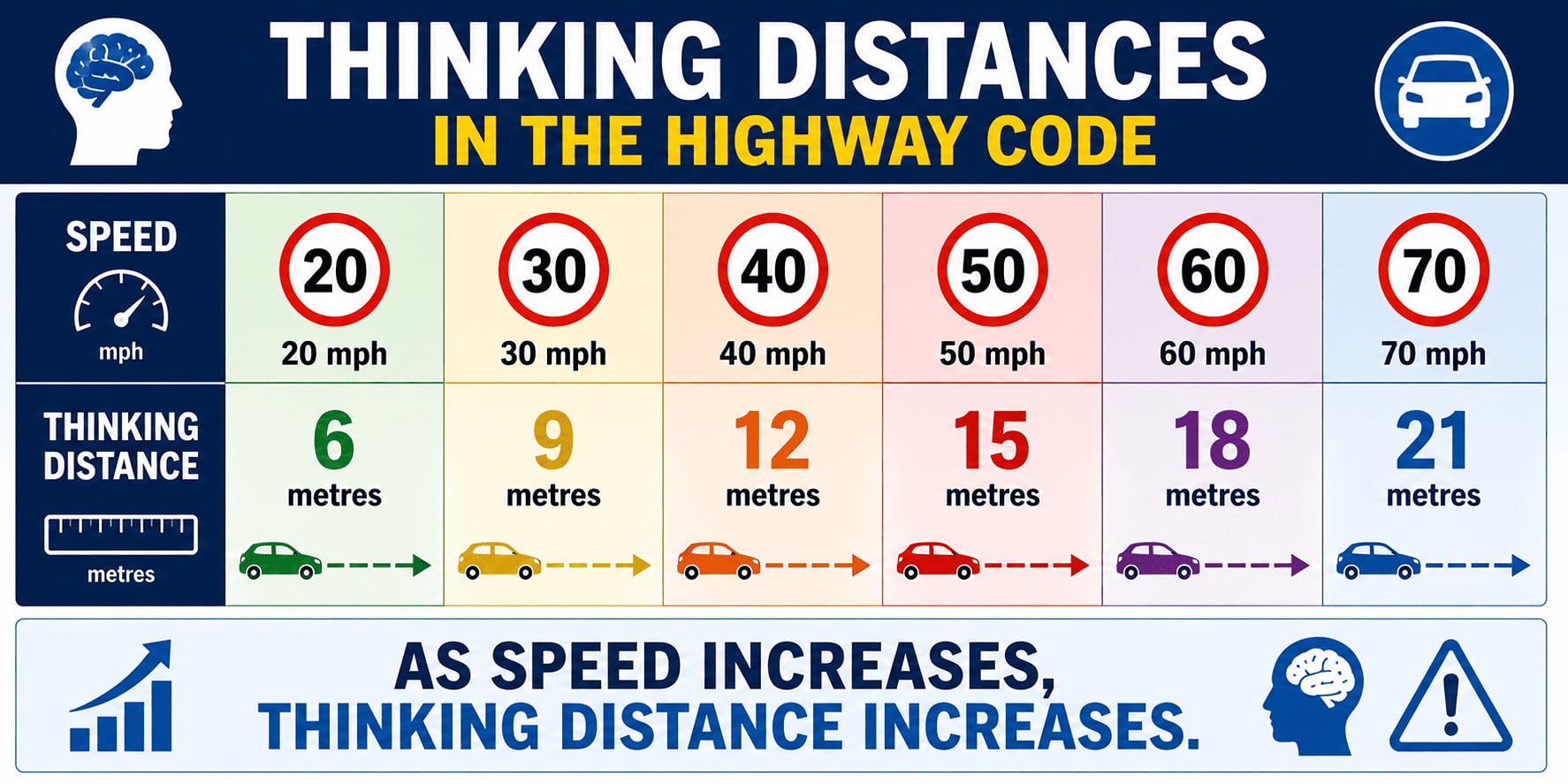
Thinking Distances in the Highway Code
Speed Thinking Distance
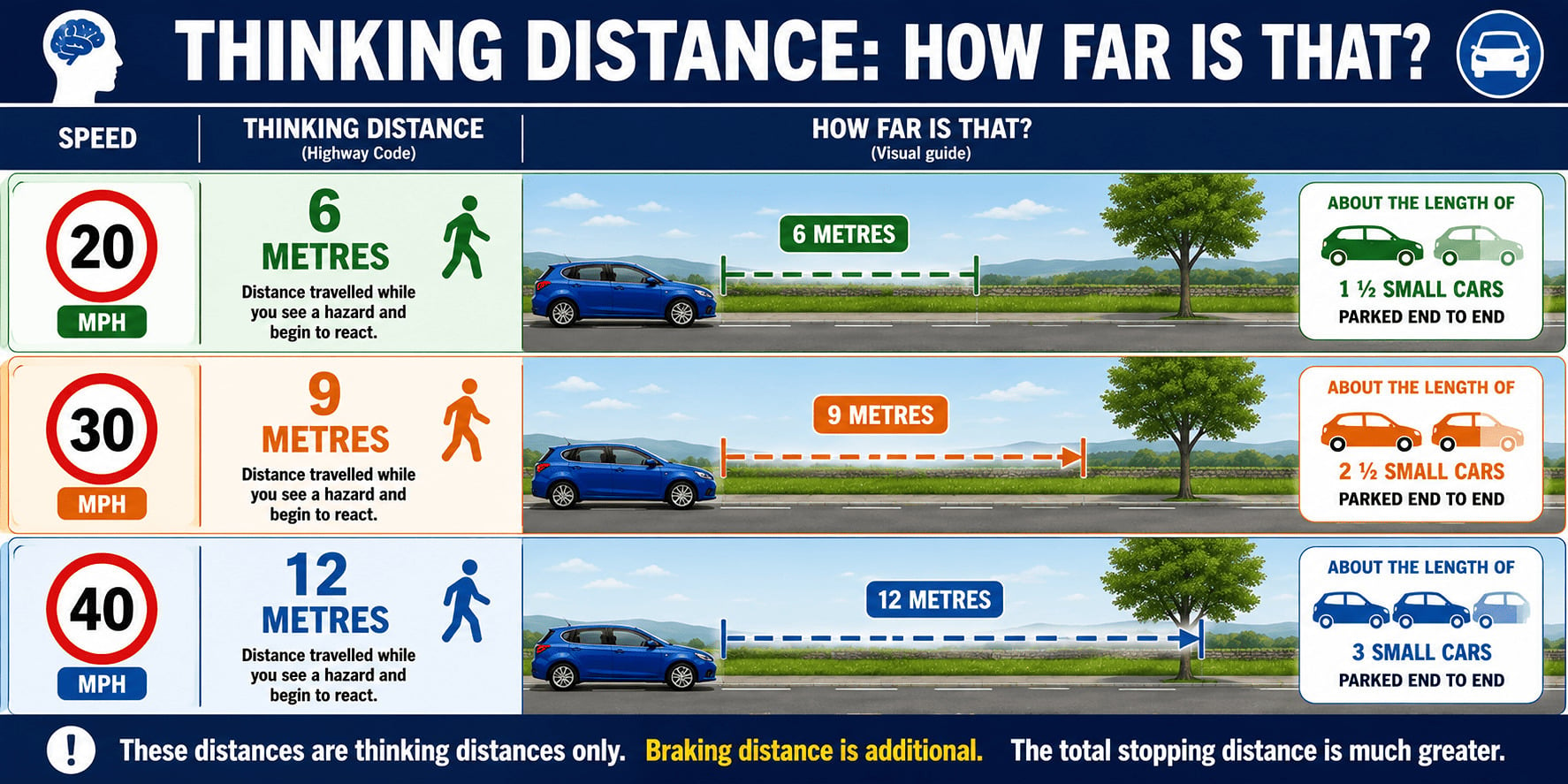
20 mph 6 metres
30 mph 9 metres
40 mph 12 metres
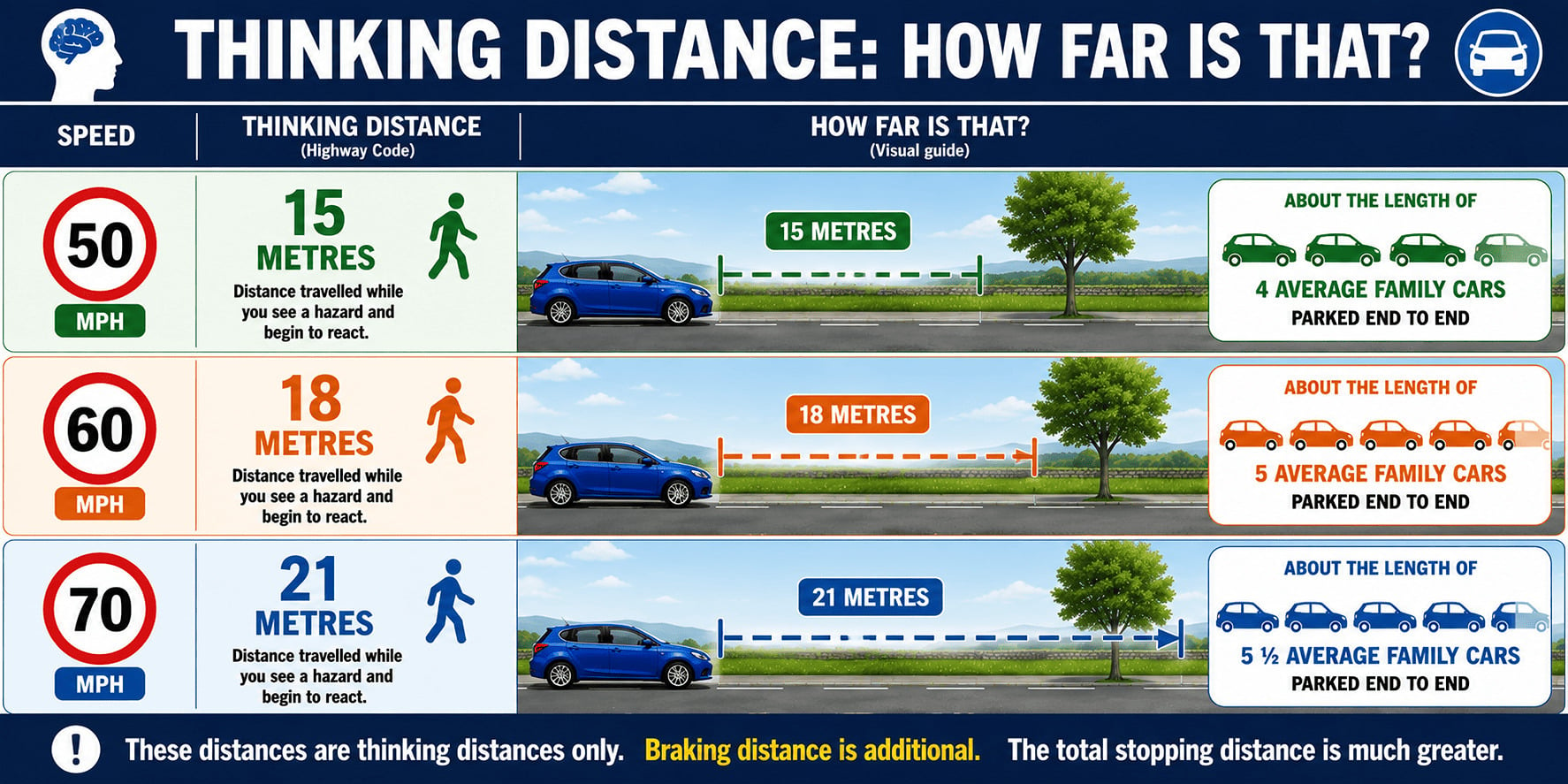
50 mph 15 metres
60 mph 18 metres
70 mph 21 metres
As speed increases, thinking distance increases.
Why Is Thinking Distance Important?
Why Is Thinking Distance Important?
Thinking distance is important because no driver can react instantly.
Even an alert driver needs time to:
Observe
Assess
Decide
React
The faster you travel, the further you will travel before braking begins.
Theory Test Question
Theory Test Question
What is thinking distance?
A) The distance travelled after braking
B) The distance travelled while reacting to a hazard ✅
C) The distance between two vehicles
D) The distance travelled in first gear
Explanation - Thinking distance is the distance travelled between seeing a hazard and applying the brakes.