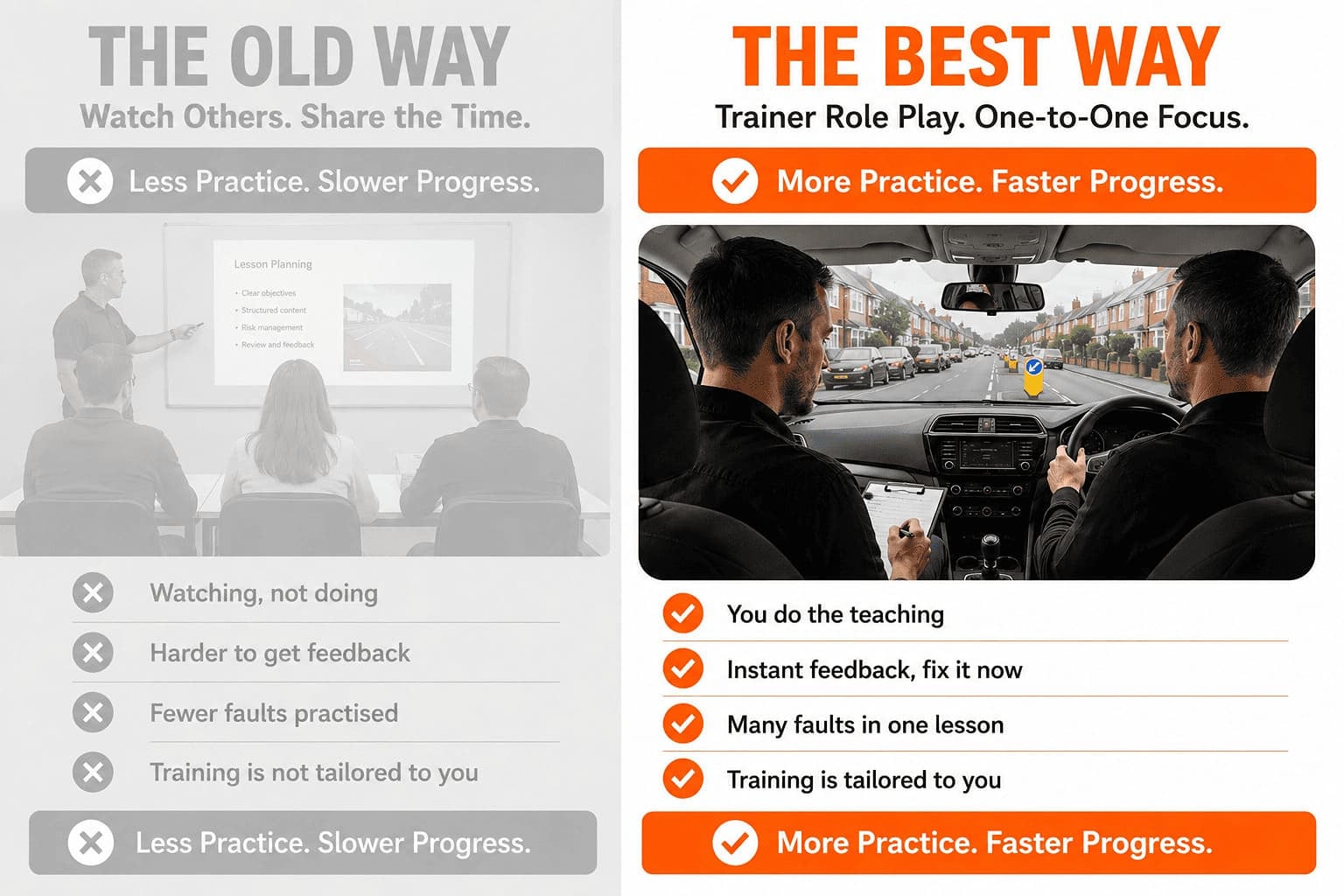
ADI Part 3 Training - Does your trainer do Role Play training?
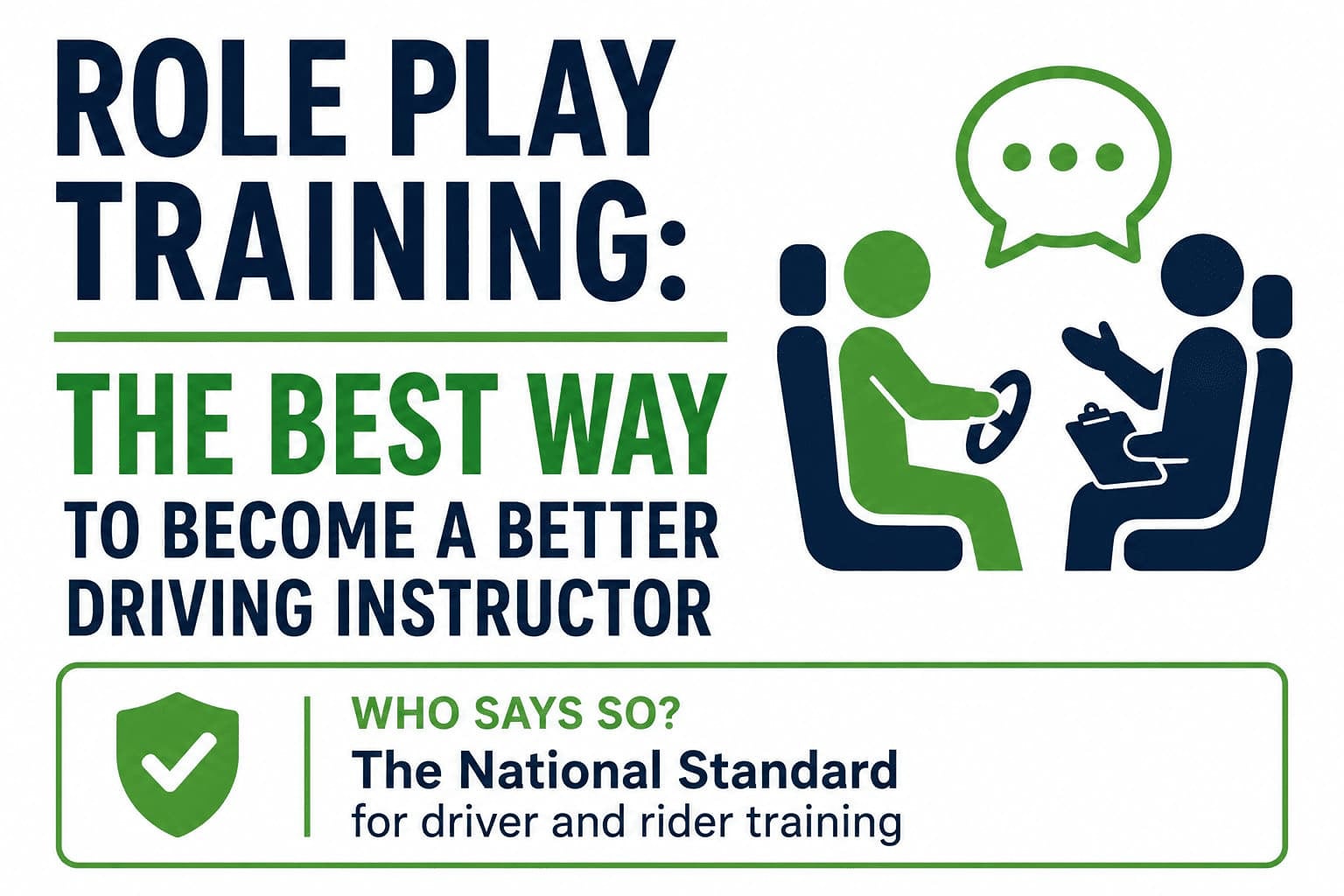
If Your Trainer Isn't Using Role Play... Your training is sub- standard
If Your Trainer Isn't Using Role Play... Your training is sub- standard
One of the biggest misconceptions in driving instructor training is that role play is optional. It isn't.
The National Standard for Driver and Rider Training contains an entire unit dedicated to it:
Unit 6 – Develop and Use a Programme of Role Play for Trainee Instructors.
The standard doesn't simply mention role play.
It expects trainers to develop a structured programme of role play that prepares trainee instructors for the situations they will encounter with real pupils.
What is ADI Part 3 Role play
Yet ask many PDIs about their training and you'll often hear:
"We've never done role play."
"My trainer just explains everything."
"I watched them teach."
"They watched me teach, then told me what I did wrong."
That's observation. That's feedback.
It isn't role play.

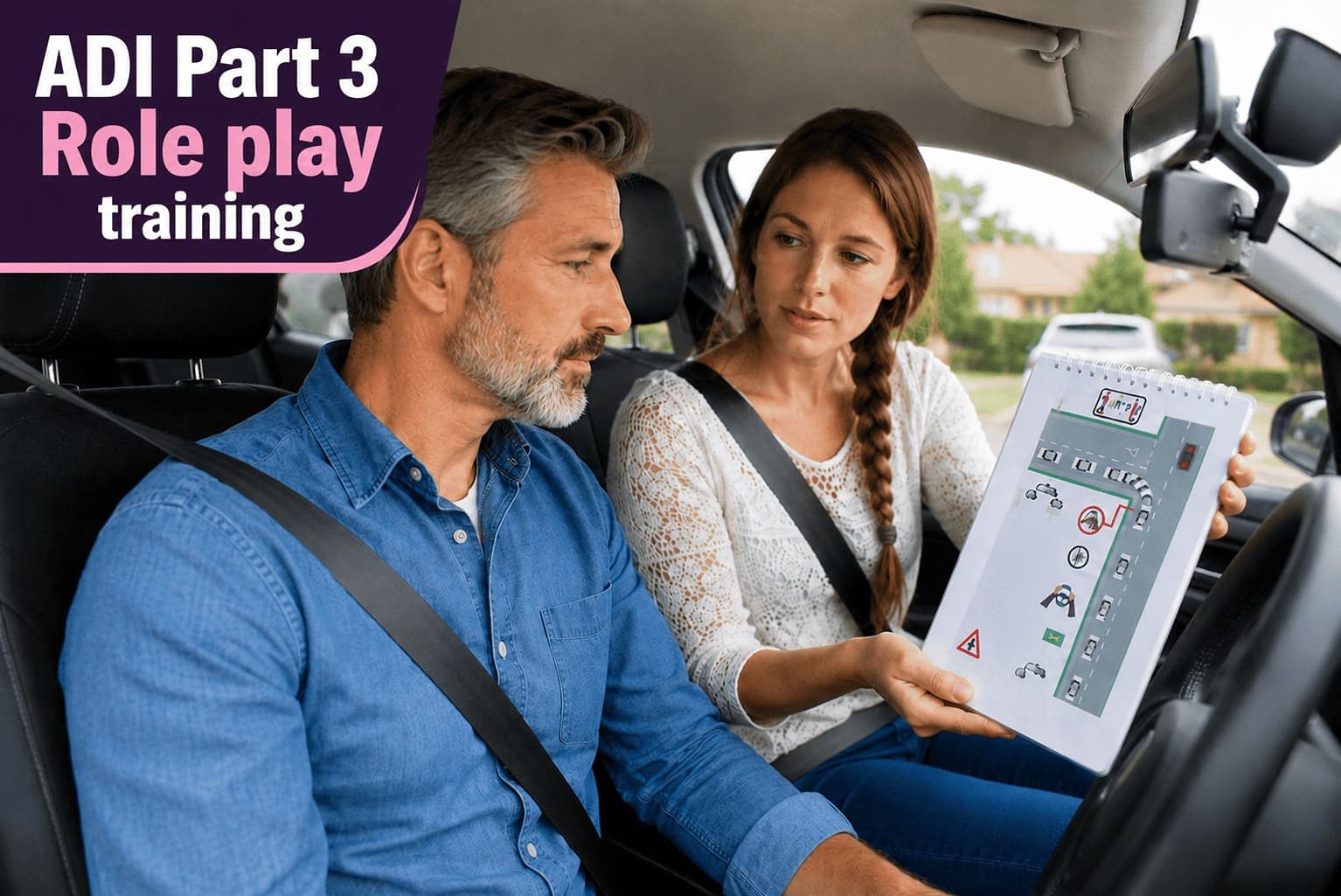
National Standards says role play is a must
According to the National Standard, trainers should be able to:
Brief you on the learning outcomes before every role play.
Become a realistic learner with specific strengths, weaknesses and attitudes.
Stay in character throughout the exercise.
Adapt the learner's faults to match your current ability.
Simulate real teaching situations safely.
Give structured feedback afterwards to build your confidence and instructional skills.
Help you understand exactly what you've learned before moving on.
programme of role play.
Notice something? This isn't an occasional exercise. It's described as a programme of role play.
That means role play shouldn't happen once or twice during your training.
It should be woven throughout your entire development.
Reading About Teaching Doesn't Make You a Teacher
Nobody would expect a learner driver to pass by simply reading the Highway Code.
So why do some trainers expect PDIs to become instructors by sitting in a classroom or watching from the back seat?

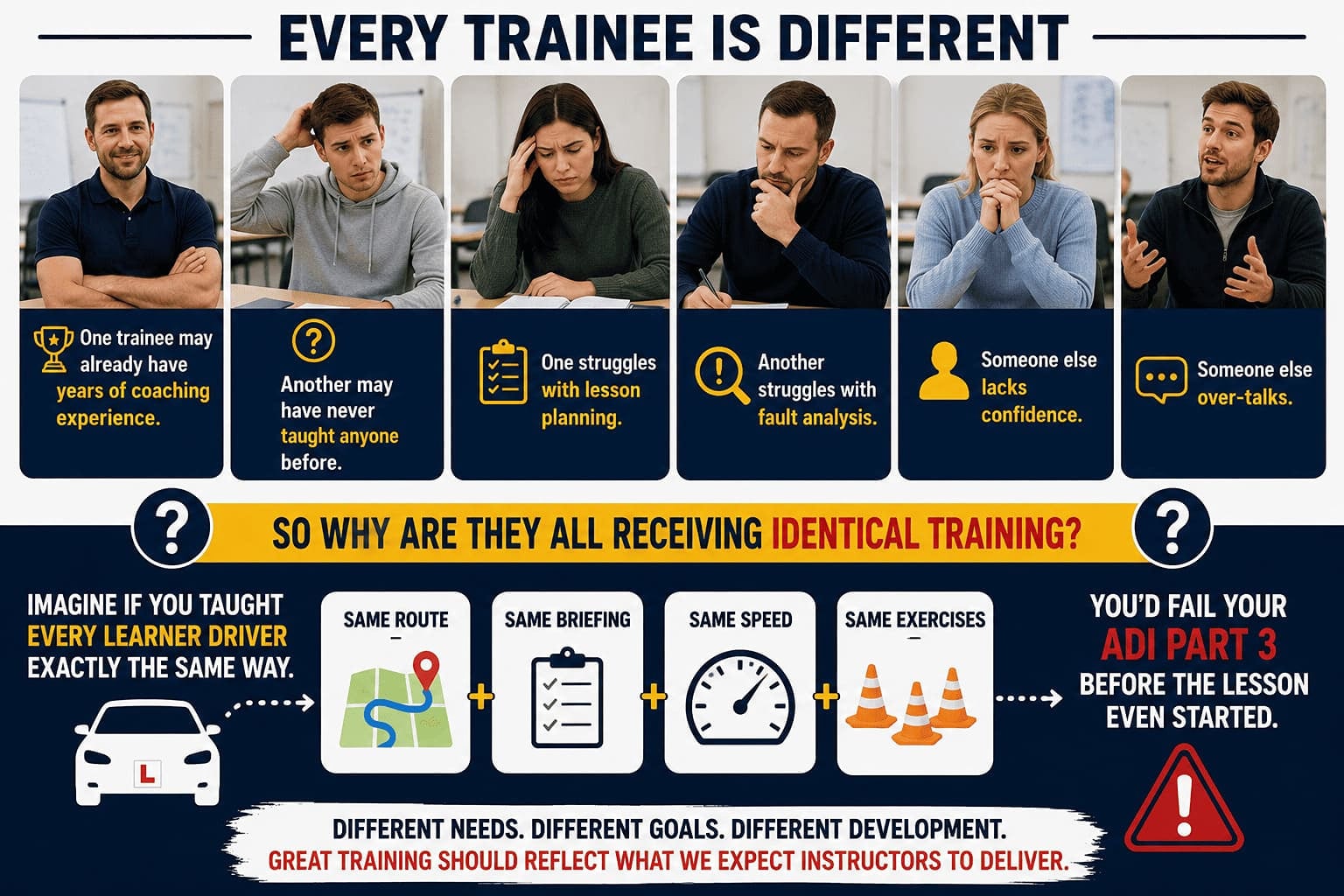
Teaching is a practical skill, The only way to develop it is by practicing it.
Teaching is a practical skill, The only way to develop it is by practicing it.
Role play allows you to make mistakes in a safe environment, develop your questioning techniques, improve your coaching skills, and learn how to deal with the situations you'll face every day once you qualify.
Ask Yourself One Question -During your training, how many structured role plays has your trainer carried out with you?
If the answer is none or very few, then you're missing one of the key training methods set out in the National Standard.
You're not just missing practice. You're missing the opportunity to build the confidence, adaptability and instructional skills that separate average instructors from outstanding ones.
You cannot learn to teach simply by watching someone else teach.
You cannot learn to teach simply by watching someone else teach.
The National Standard recognises this.
That's why The National Standard doesn't recommend role play...
It requires trainers to develop and use a programme of role play throughout your instructor training.