ADI Part 1 Hardest Questions Latest Update Edition
1. From The Driving Instructor’s Handbook
When teaching a pupil to deal with meeting traffic on narrow roads, what’s the most effective instructional technique to reduce risk while developing independent decision-making?
A) Give continuous commentary so they always know what to do
B) Allow them to decide when to hold back, then review their judgement afterwards
C) Instruct them to stop whenever another vehicle approaches
D) Prompt them to move through as soon as possible to avoid holding others up
✅ Answer: B
Explanation: This approach supports client-centred learning — encouraging pupils to make their own risk-based decisions and reflect afterwards. Over-instructing prevents development of judgement and independence.
What are cord markings, and where would you find them?
What is the maximum authorised mass of a hydrogen-powered vehicle that may be driven on a Category B licence?
What is the maximum authorised mass of a trailer that may be towed by a Category B licence holder?
What is the maximum authorised mass of a vehicle-and-trailer combination that may be driven on a Category B licence?
When giving CPR to an adult, what is the correct ratio of chest compressions to rescue breaths?
What should you do if an automated external defibrillator (AED) tells you that no shock is advised?
What is the recommended depth and rate of chest compressions when performing CPR on an adult?
What is the minimum unmarked headroom normally provided beneath a bridge over a public road?
What is the maximum authorised mass of a vehicle that may be driven on a Category B licence when powered by an alternative fuel?
What is the maximum authorised mass of an unbraked trailer that may normally be towed by a car?
Stay Ahead of the rest
2. From National Standard for Driving Cars and Light Vans
The standard requires instructors to understand rules for vulnerable road users.
Which of these best explains why?
A) Because ADIs may occasionally teach motorcyclists
B) Because instructors must anticipate other road users’ behaviour and teach pupils to do the same
C) Because it’s a test requirement, not a teaching need
D) Because vulnerable road users are responsible for their own safety
✅ Answer: B
Explanation: The National Standard emphasises hazard awareness and risk management — instructors must help learners recognise the needs and behaviour of vulnerable users like cyclists and pedestrians.
3. From Know Your Traffic Signs
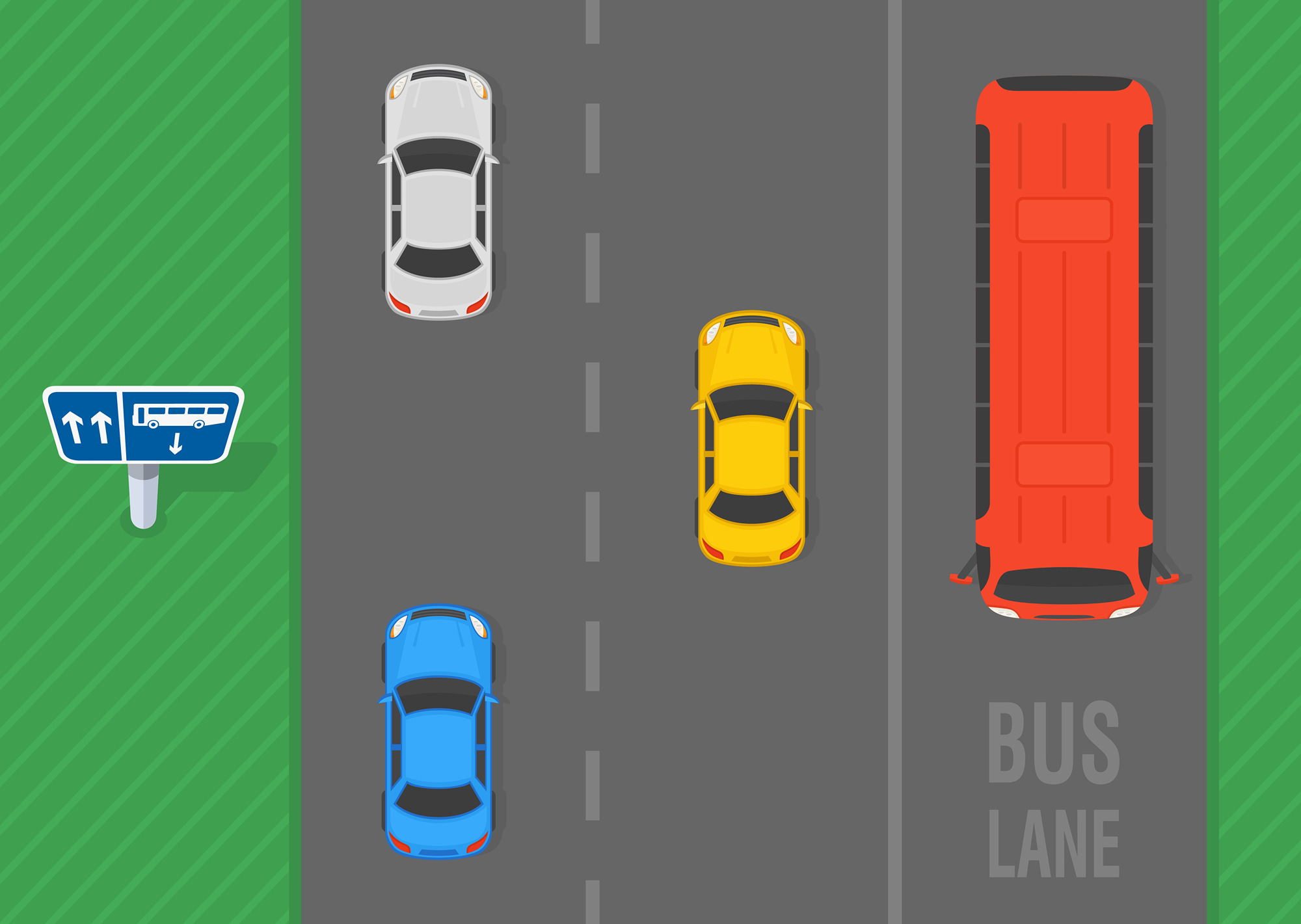
What’s the difference between an offside bus lane and a contraflow bus lane?
A) An offside bus lane runs against oncoming traffic; a contraflow runs beside it
B) An offside bus lane is next to the central reservation; a contraflow runs against the general flow of traffic
C) Both run in the same direction but serve different routes
D) There is no difference — both are bus-only routes
✅ Answer: B
Explanation: Offside bus lanes are next to the central reservation (same traffic flow); contraflow bus lanes run opposite the normal direction of traffic, separated by markings or barriers.
4. From Driving – The Essential Skills
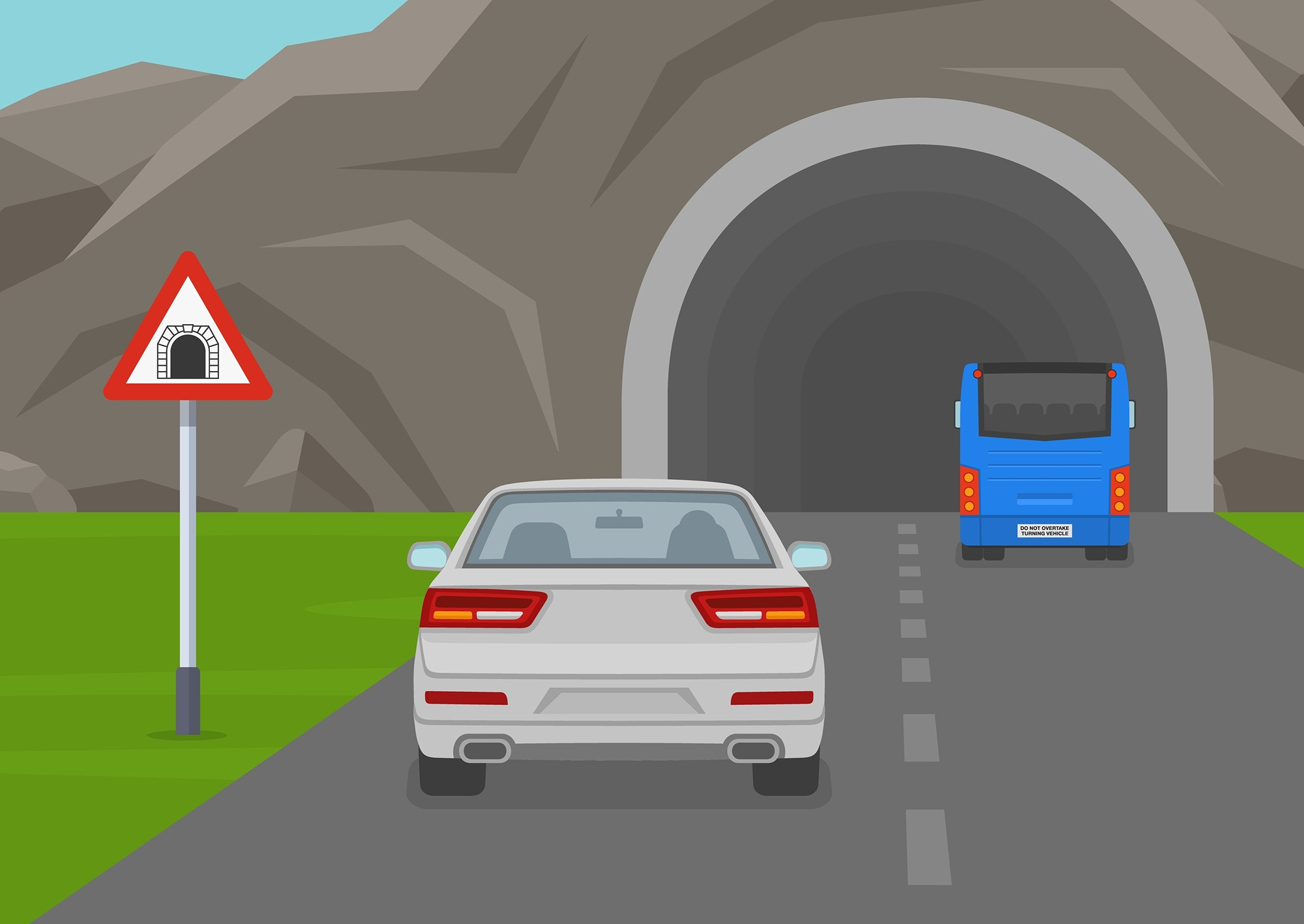
When driving through a long tunnel, what’s the correct action if your vehicle breaks down?
A) Stay in the vehicle and call for help
B) Attempt to restart immediately, regardless of location
C) Switch on hazard lights, evacuate via the nearest emergency exit, and call for help
D) Push the vehicle to the side
✅ Answer: C
Explanation: Tunnel safety prioritises evacuation. You should turn on hazard lights, leave via the marked exit, and call for help — do not remain inside the vehicle.
5. From Practical Teaching Skills for Driving Instructors
Which statement best defines guided discovery?
A) The instructor tells the pupil the answer to reinforce accuracy
B) The pupil experiments and finds answers through structured questions from the instructor
C) The pupil drives independently without feedback
D) The instructor sets multiple-choice questions mid-lesson
✅ Answer: B
Explanation: Guided discovery means prompting learners to find answers themselves through structured questioning — building deeper understanding and retention.

6. From Carrying Out Driving Tests: Examiner Guidance
Which behaviour would most likely result in a serious fault during a test?
A) Hesitating slightly before emerging
B) Failing to check mirrors before signalling
C) Incorrect use of MSM routine
D) Repeatedly exceeding the speed limit by small amounts
✅ Answer: D
Explanation: A serious fault occurs when behaviour presents a sustained or significant safety risk. Repeated speeding breaches demonstrate lack of control and poor awareness of limits.
7. From The Highway Code – Signals by Drivers and by Police
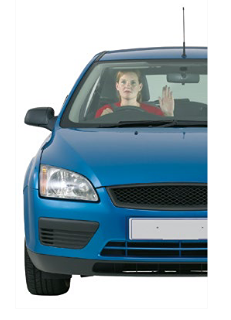
Which hand signal tells a traffic officer that the driver intends to go straight ahead?
A) Left arm making a circular motion
B) Left arm extended and moved up and down
C) Left arm extended with a circular motion anti-clockwise
D) Left arm extended, palm facing forward, moved upward and downward several times
✅ Answer: D
Explanation: This arm signal (up-and-down movement, palm forward) means “I intend to go straight ahead.” It’s vital for visibility when indicators aren’t clear or visible.

8. From The Official DVSA Guide to Learning to Drive
Why should a driving instructor introduce commentary driving to a more advanced pupil?
A) To pass time during long lessons
B) To improve observation, planning, and anticipation
C) To test their memory of road signs
D) To keep them alert in heavy traffic
✅ Answer: B
Explanation: Commentary driving strengthens higher-level awareness and planning — core instructor skills that help pupils anticipate hazards and understand road context.
9. From Driving Instructor Code of Practice
According to the Code of Practice, which behaviour undermines public trust in ADIs?
A) Charging different rates for weekend lessons
B) Discussing another instructor’s pupil performance publicly
C) Using a dual-controlled car
D) Providing feedback after each lesson
✅ Answer: B
Explanation: Discussing another instructor’s pupil breaches confidentiality and professionalism. The Code emphasises discretion and respect for others in the profession.


10. Integrated Twist Question – Multiple Sources
Which response best aligns with The National Standard and Practical Teaching Skills for Instructors?
A) Give direct instruction each time and move on once they respond correctly
B) Ask guided questions to help the pupil identify the risk and plan their own safe response
C) Increase lesson pace to expose them to more examples
D) Avoid such situations until test standard
✅ Answer: B
Explanation: This approach combines coaching and reflection — exactly what the National Standard promotes for risk management and self-evaluation. It teaches long-term awareness, not short-term compliance.