What is the stopping distance at 40 mph?
Theory Help - Youtube - Books
What Is the Stopping Distance at 40 mph?
What Is the Stopping Distance at 40 mph?
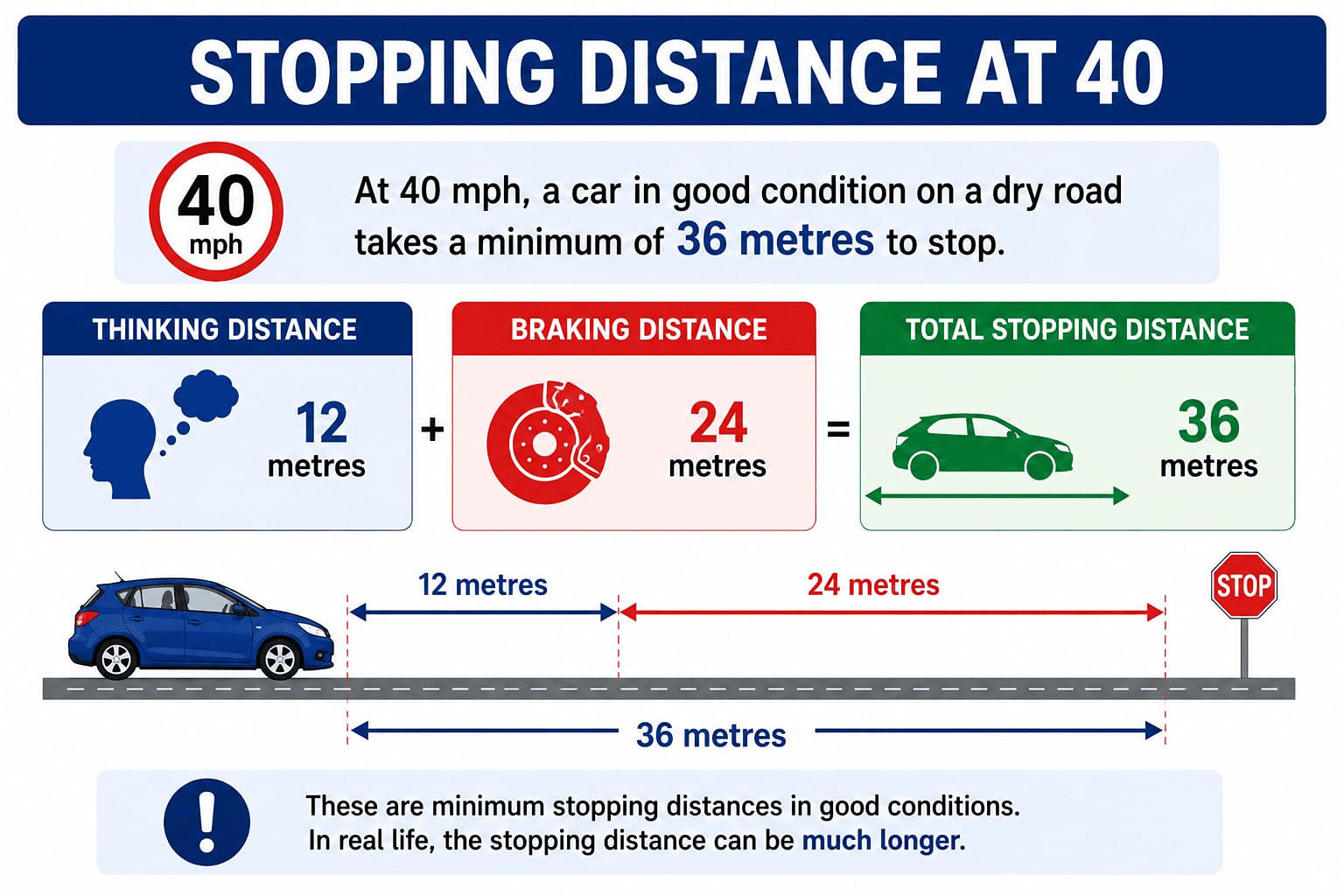
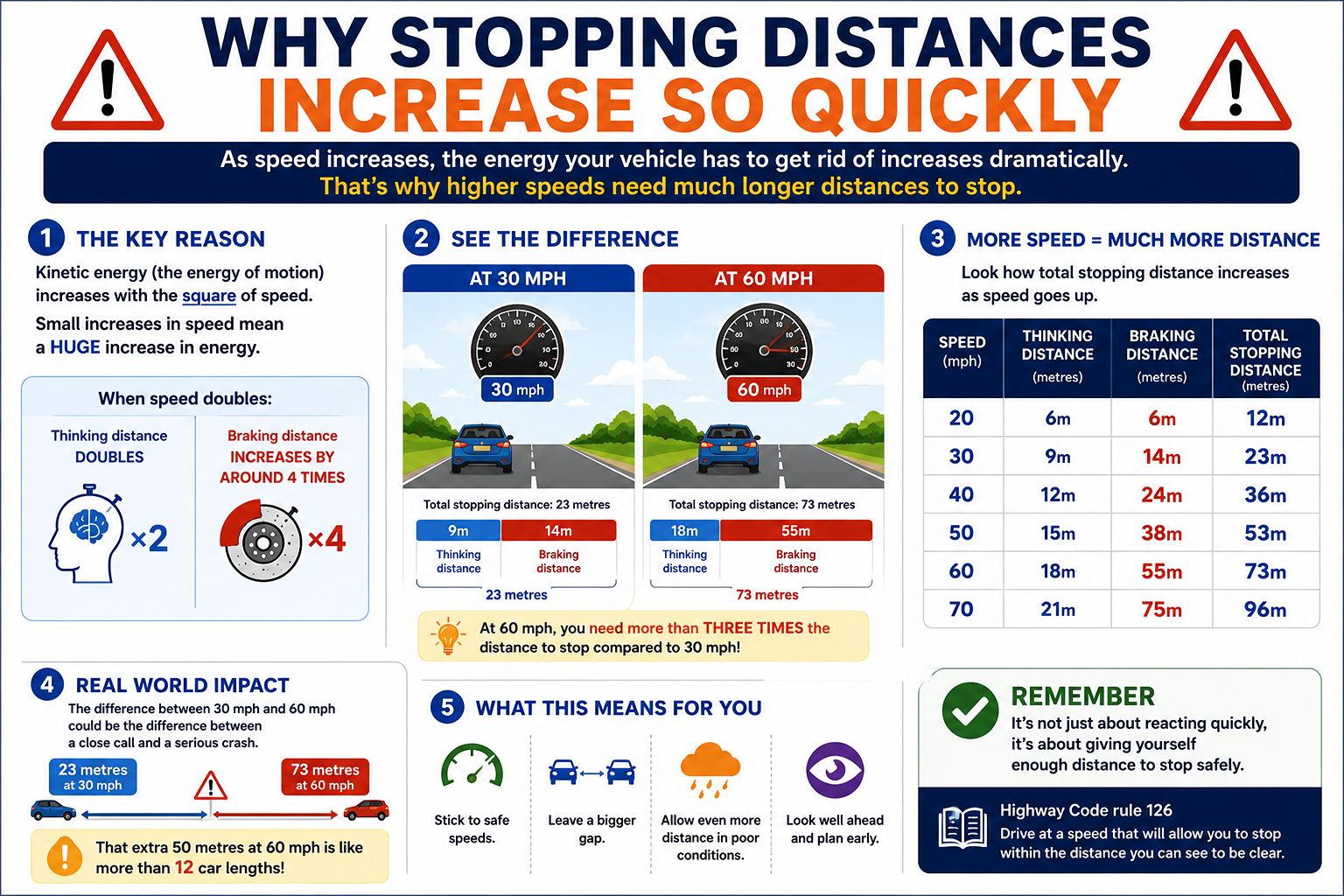
If you're travelling at 40 mph, the official stopping distance in the UK is 36 metres. According to the Highway Code, this consists of 12 metres of thinking distance and 24 metres of braking distance, based on ideal conditions with a dry road, good tyres, effective brakes and a driver who reacts promptly.
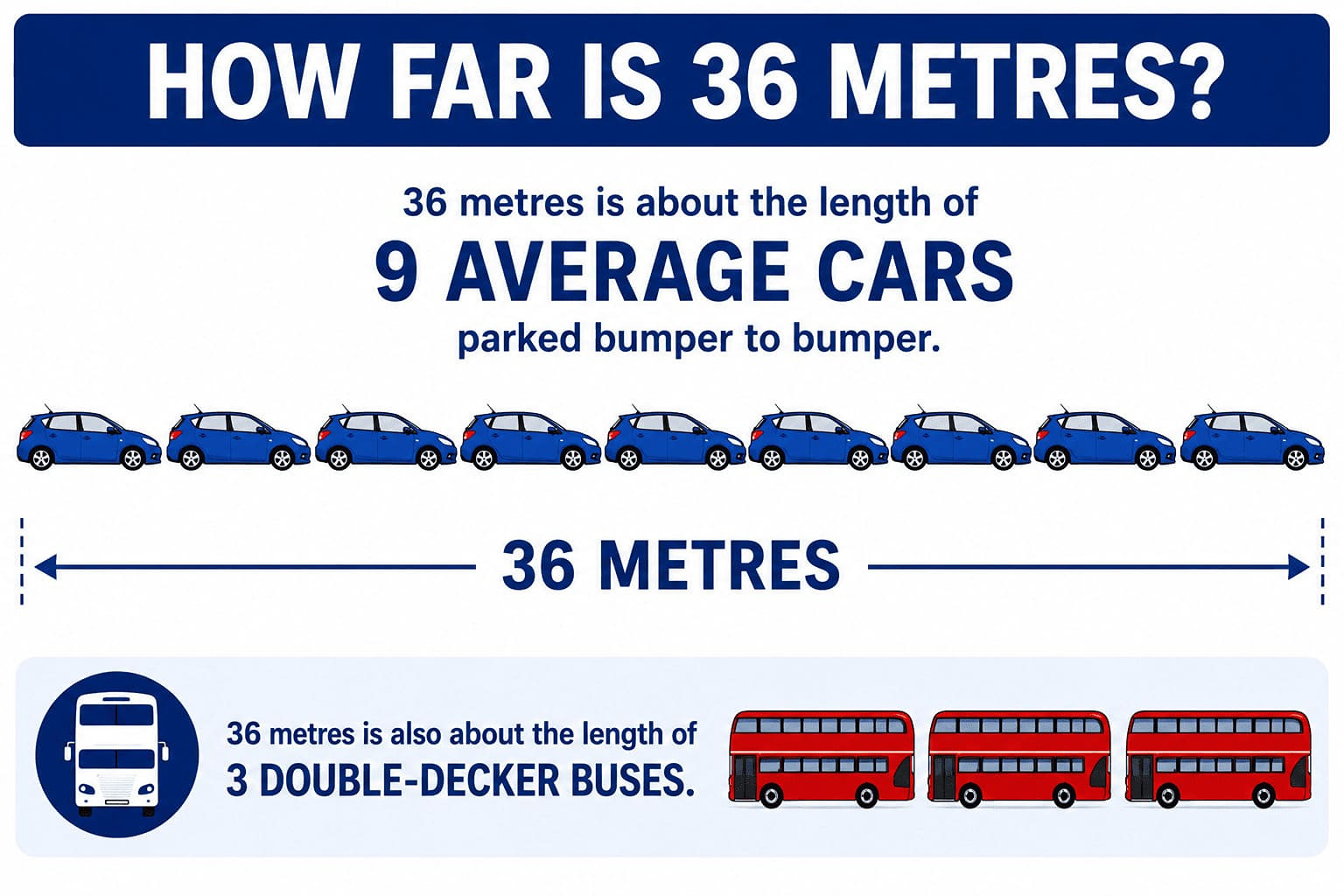
To help visualise 36 metres, it's about the length of nine average family cars parked bumper to bumper. That's much further than many drivers expect, especially when travelling on roads where hazards can appear suddenly.
Breaking Down the 36 Metres
Breaking Down the 36 Metres
Stopping distance is made up of two separate stages:
Thinking distance: 12 metres
Braking distance: 24 metres
Total stopping distance: 36 metres
Thinking distance is how far your car travels from the moment you spot a hazard until you begin braking. Even an alert driver cannot react instantly, and during that split second your vehicle continues moving at 40 mph.
Braking distance begins when you press the brake pedal. This is the distance the vehicle needs to slow down and come to a complete stop. At 40 mph, the brakes must absorb a significant amount of energy before the vehicle stops.
Why Doesn't a Car Stop Immediately?
Why Doesn't a Car Stop Immediately?
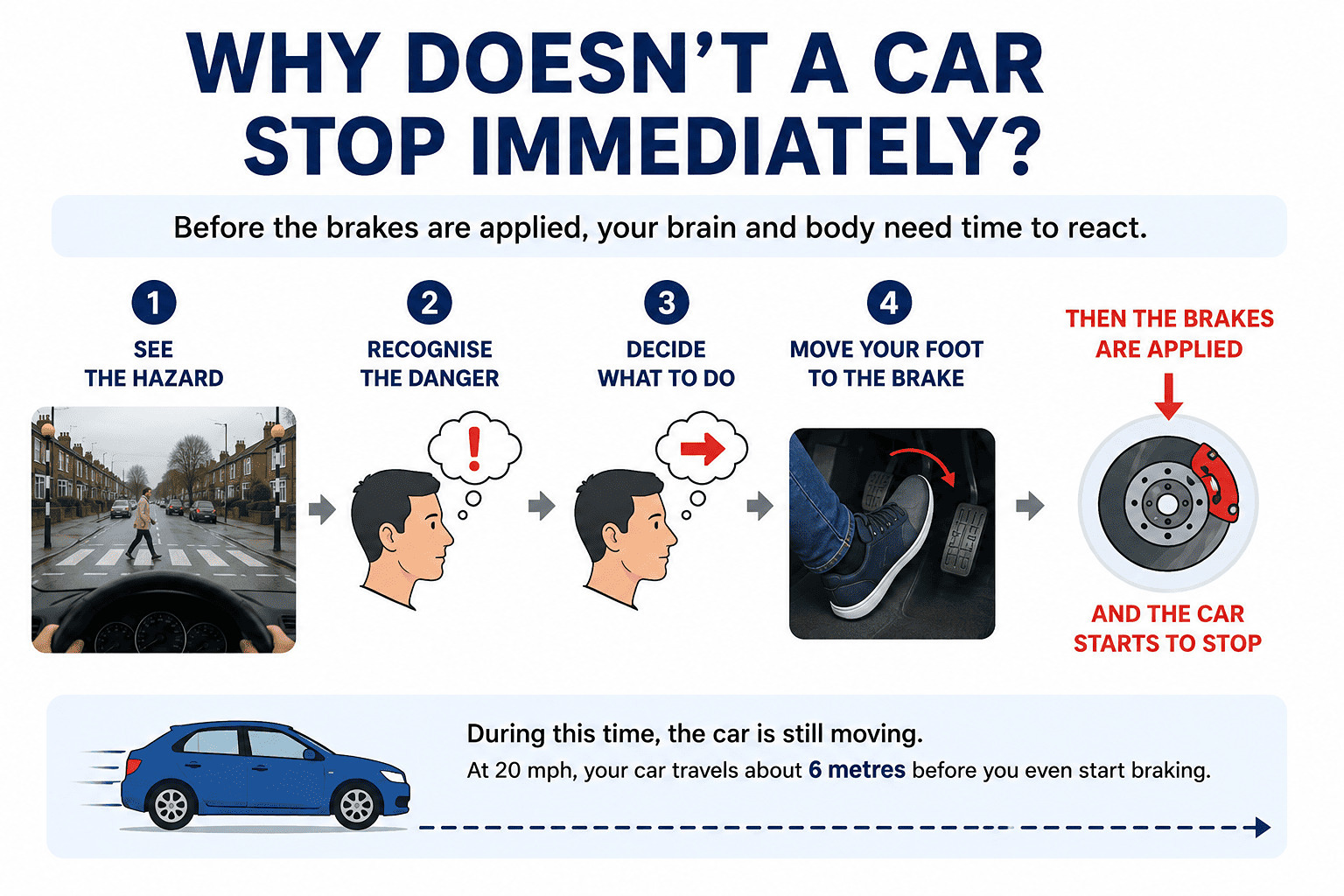
No matter how good your brakes are, a vehicle cannot stop the instant you see a hazard. There is always a delay while your brain recognises the danger, decides what to do and sends a signal to your foot to press the brake pedal.
The total stopping distance can also be affected by several factors, including:
Wet, icy or loose road surfaces
Worn or under-inflated tyres
Poorly maintained brakes
A heavily loaded vehicle
Driver tiredness or distraction
In poor conditions, the actual stopping distance can be much greater than the Highway Code figure.
Why 40 mph Is Faster Than It Feels
Why 40 mph Is Faster Than It Feels
Many drivers underestimate how much extra distance is needed as speed increases.
Compare the official stopping distances:
30 mph: 23 metres
40 mph: 36 metres
50 mph: 53 metres
Although 40 mph is only 10 mph faster than 30 mph, the stopping distance increases by 13 metres. That extra distance could easily be the difference between stopping safely and colliding with a hazard.
This is why it's important to keep within the speed limit and leave enough space between you and the vehicle in front.
Why You Need to Know This for the Theory Test
Why You Need to Know This for the Theory Test
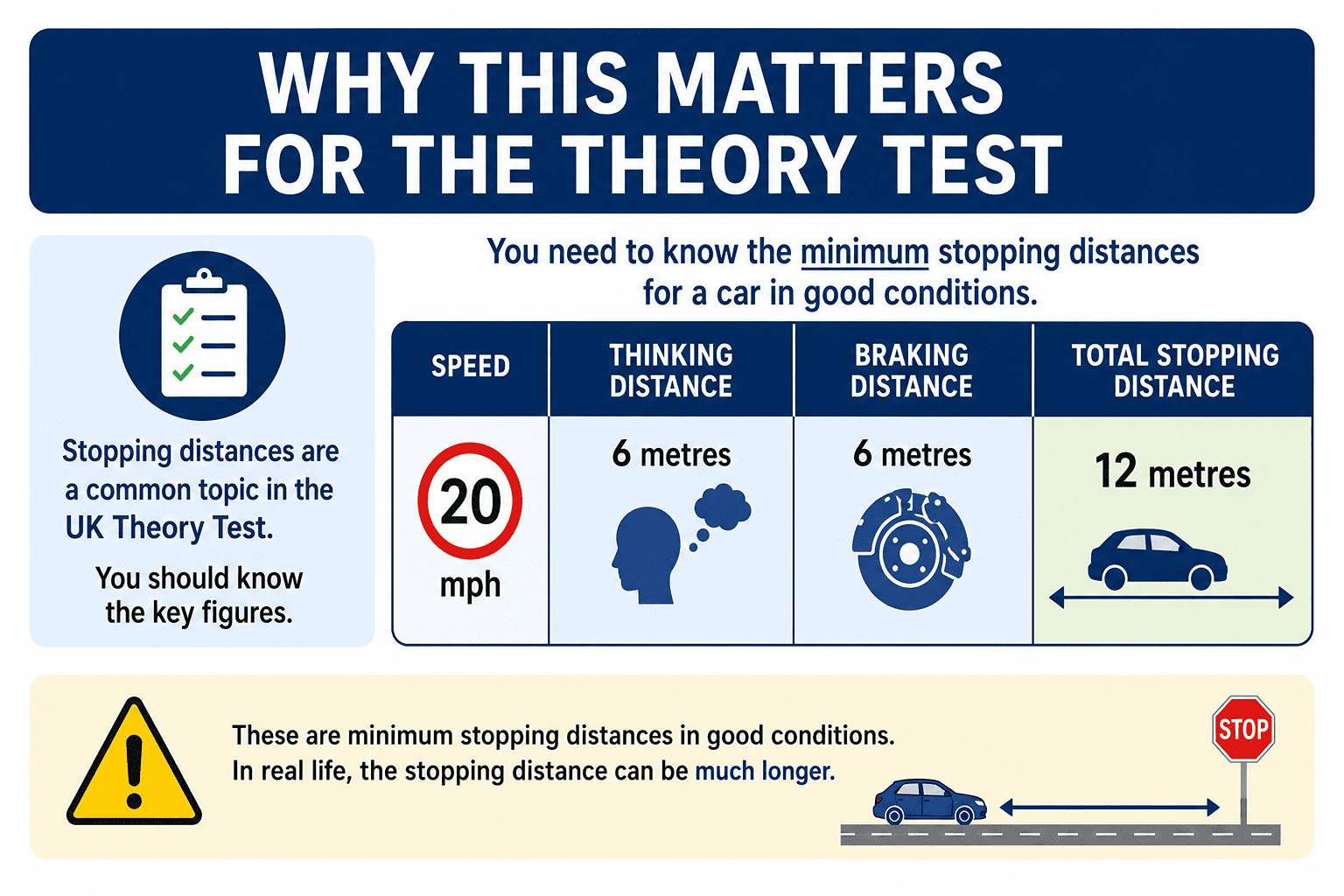
Stopping distances are a key part of the UK theory test and are based on the official Highway Code figures. You should not only remember the distances but also understand that they apply only in ideal driving conditions.
Theory test questions may also ask about situations where stopping distances increase, such as during wet weather, on icy roads, when driving downhill or if your tyres and brakes are not in good condition.
The official Highway Code figure is easy to remember:
Stopping distance at 40 mph
At 40 mph, the total stopping distance is 36 metres, made up of 12 metres of thinking distance and 24 metres of braking distance.
Understanding this figure will help you answer theory test questions confidently and, more importantly, give you a better appreciation of how much space you need to drive safely every day.