Mini Roundabouts
Follow us on Youtube - Books - Theory Test - Online Courses - Lessons
Mini Roundabouts Explained
Why Mini Roundabouts Are Different (And Why You Must understand This)
On a normal roundabout, there is structure:
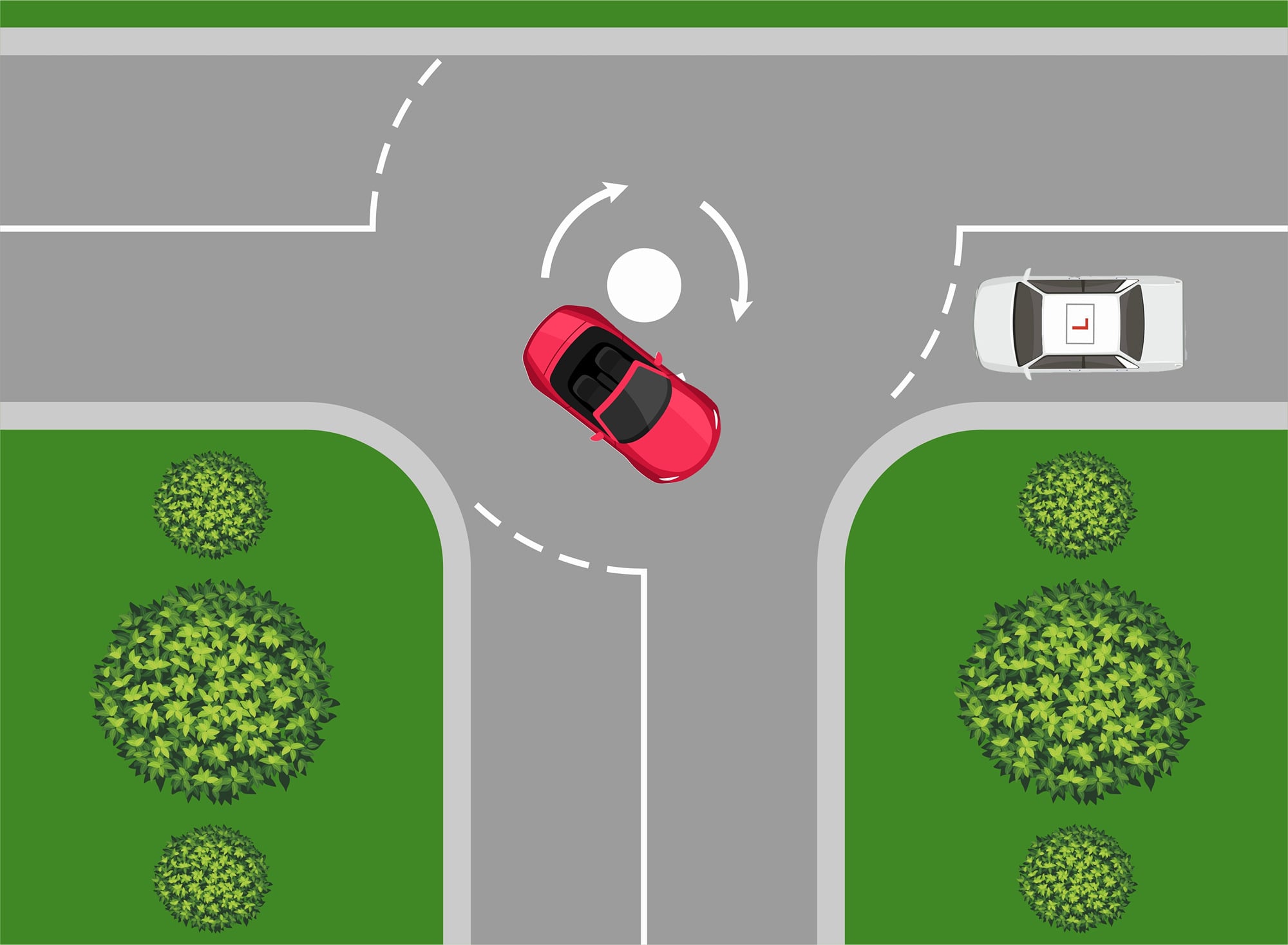
Vehicles follow a circular path
You can use the clock face method
You can apply danger zones
But on a mini roundabout, that structure breaks down. Vehicles may:
Turn before reaching the centre
Drive straight over the middle
Turn late
Not signal at all
Treat it like a crossroads
This makes them less predictable and higher risk.
Identifying a mini roundabout
Identification (Lesson Planning Starts Early)
Strong teaching begins before the junction.
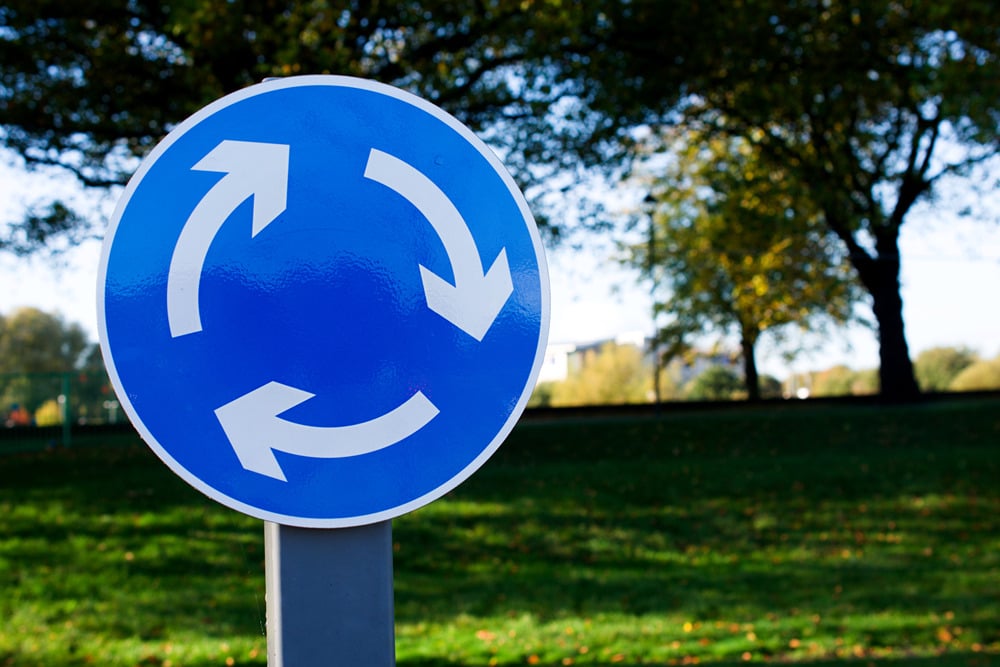
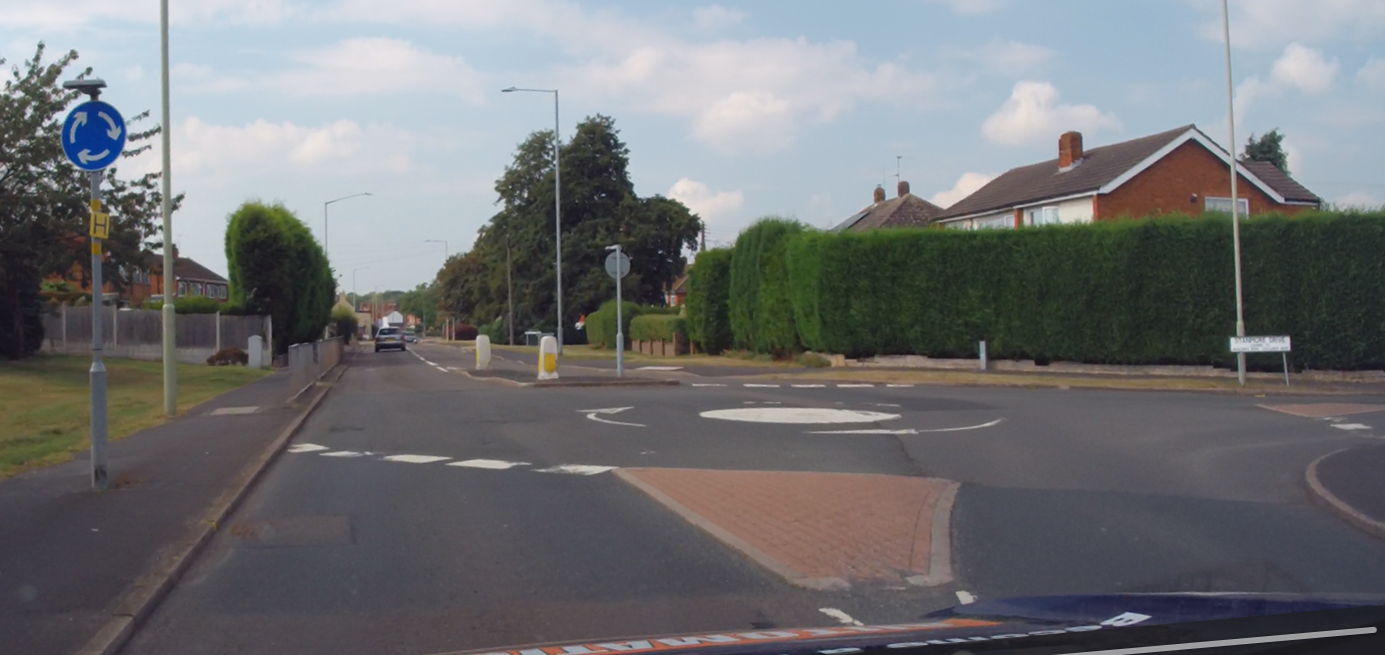
Teach pupils to identify a mini roundabout by:
The blue circular roundabout sign
The white painted circle on the road
Give way lines on approach
The overall junction layout
Early identification leads to earlier planning—and safer decisions.
Open or Closed Junction
Open or Closed Junction
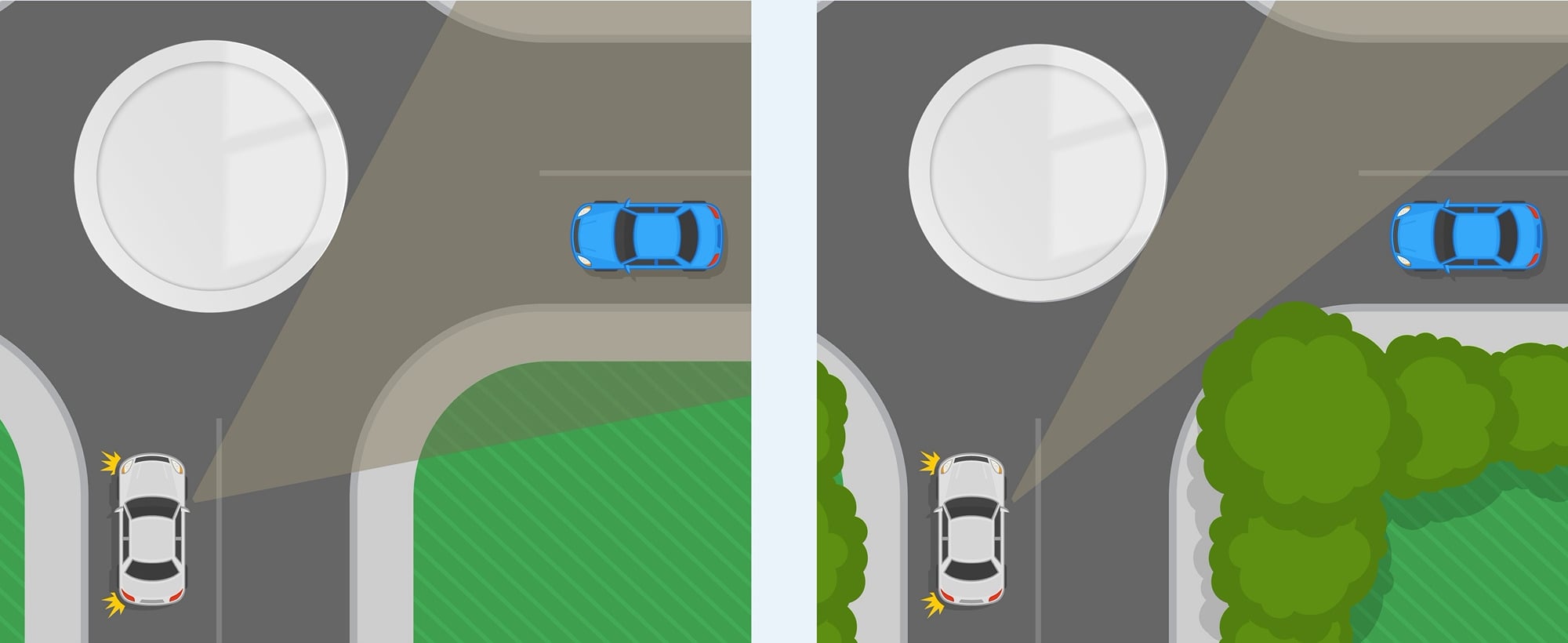
Are there buidings, bushes, brickwork or vehicles blocking your view on approach? If its open and you can see clearly you may be able to keep going if its clear, If its a closedjunction and you can't see whats coming you need to go slowly or stop first.
Mini roundabouts are often more closed.
That means:
Visibility may be restricted by buildings, parked cars, hedges
Traffic from the right is closer
Traffic ahead is closer
This is critical for risk management.
Mini Roundabout Position
Position of the Roundabout (Affects Speed and Control)
The position of the mini roundabout changes how you approach it.
If it is slightly offset:
Less steering required
Smoother path
Slightly more flow
If it is directly in front:
More steering required
More control needed
Slower speed essential
Observations on Mini Roundabouts
OBSERVATIONS
Right → Ahead → Left → Ahead → Right
Why observations matter even more on mini roundabouts
Mini roundabouts might be small—but they demand more observation, not less.
Because:
The junction is tighter
Traffic is closer
Your view is often restricted by buildings, parked cars, or hedges
That means hazards can appear later and closer to you
Correct observation routine
Even on a mini roundabout, the observation pattern should still be:
Right → Ahead → Left → Ahead → Right
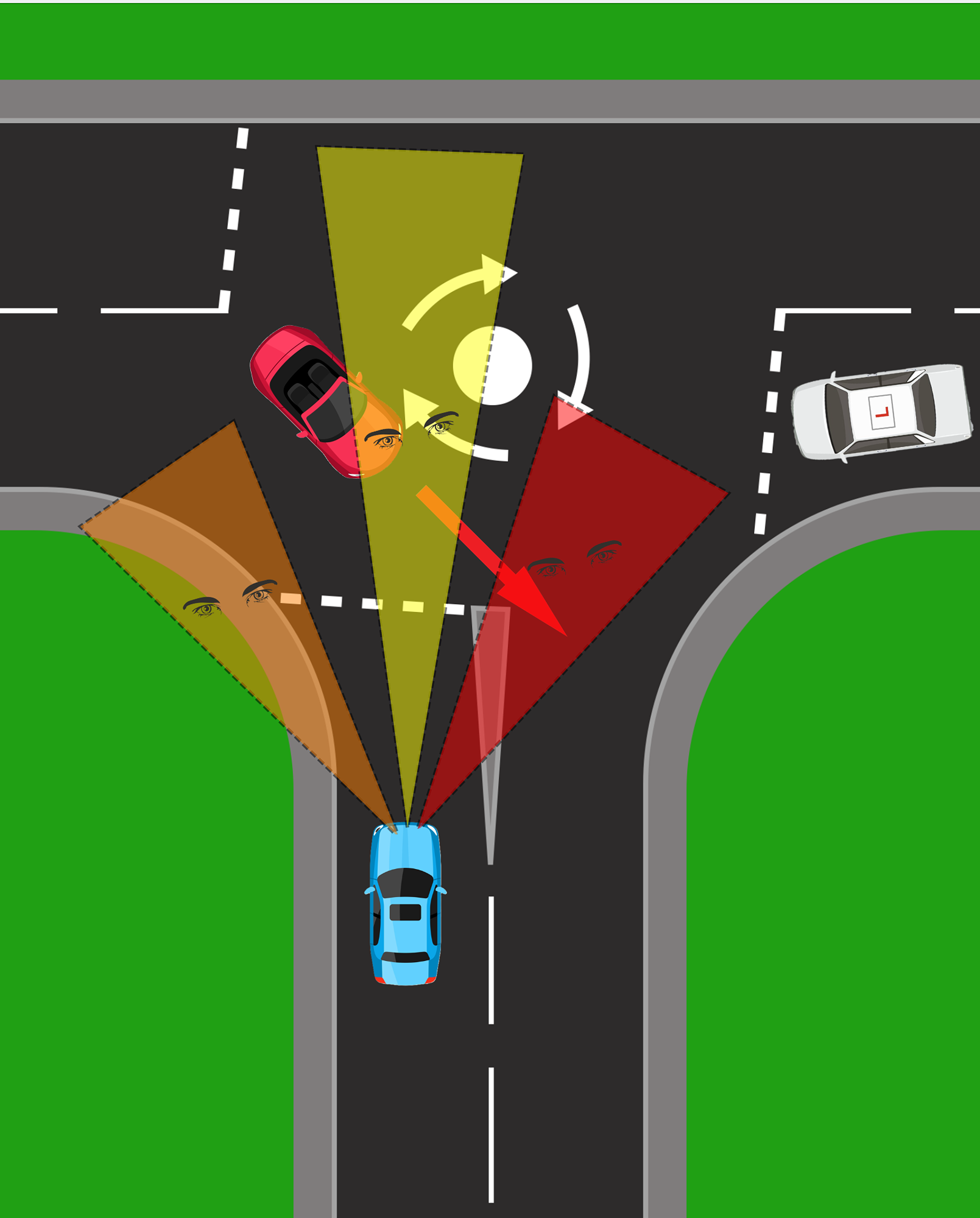
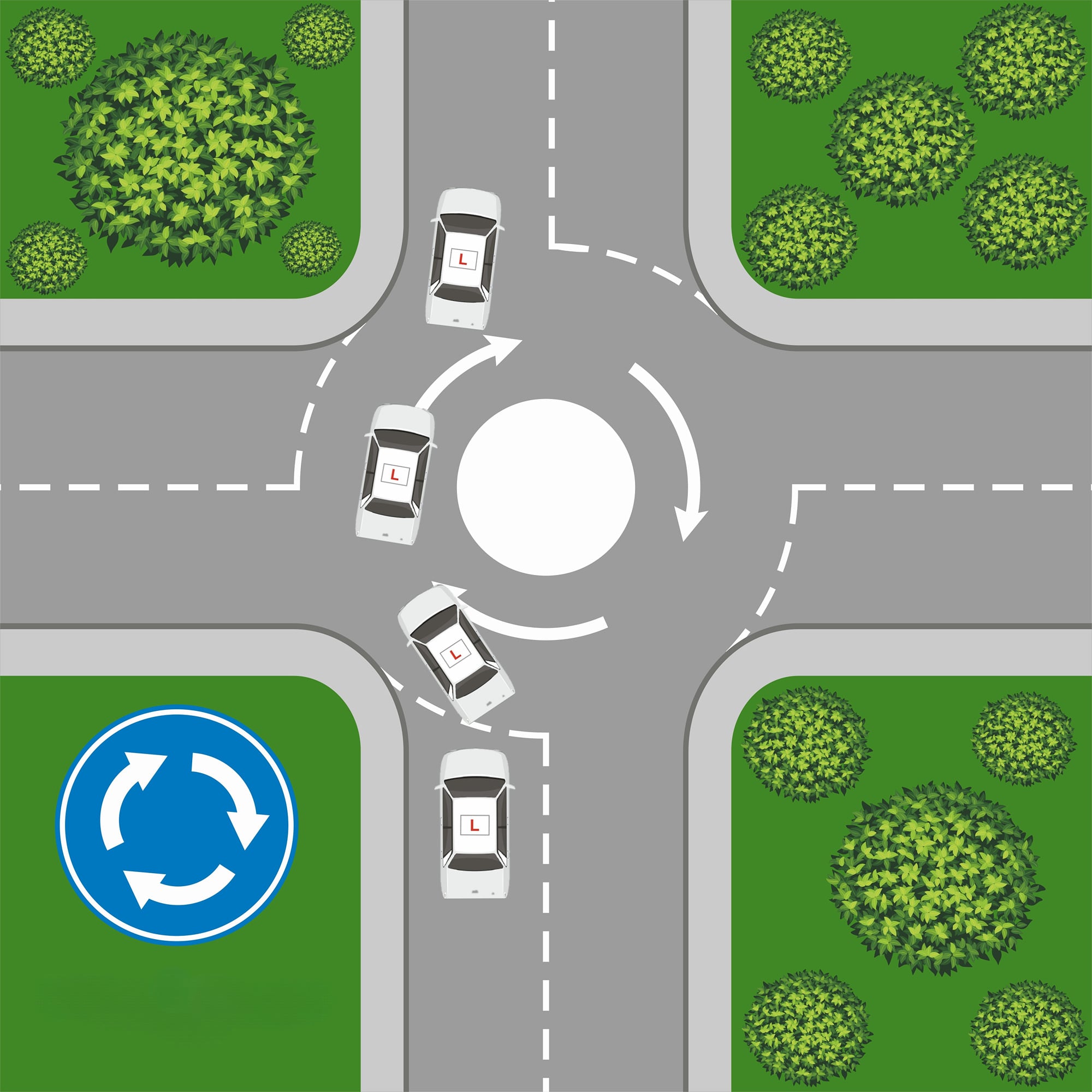
Mini Roundabout and MSPSGL
MSPSGL (Keep It Traditional, Apply It Properly)
The routine remains the same:
Mirrors
Signal
Position
Speed
Gear
Look
But the key difference is in speed and look:
Speed must allow you to stop comfortably
Observations must be more frequent and deliberate
Vehicle First - Mini Roundabout Second
VEHICLE FIRST, ROAD SECOND perhaps the biggest change when it comes to dealing with mini roundabouts is the fact we need to deal with the other vehicle first and then the road layout.
As we have already said on a normal roundabout the car opposite has to follow a set line, however on a mini roundabout, in theory it still should, in reality it very often doesn’t
What does that actually mean?
Instead of thinking:
“It’s a roundabout, so that car should go around it…”
You think:
“What is that car actually doing right now?”
Because on mini roundabouts especially, drivers:
Cut across before the roundabout
Go over the mini roundabout
Change direction late
Don’t always follow the expected path