Moving Away using POM or POSM?
If you’ve spent any time around learner drivers, you’ll have heard the phrase “POM”—Preparation, Observation, Move. It’s been around for years, and for good reason. It’s simple, memorable, and it works.
But as with most things in driving, once you move from learning to drive into teaching someone else to drive—especially for ADI Part 3—you start to realise that simple doesn’t always mean complete.
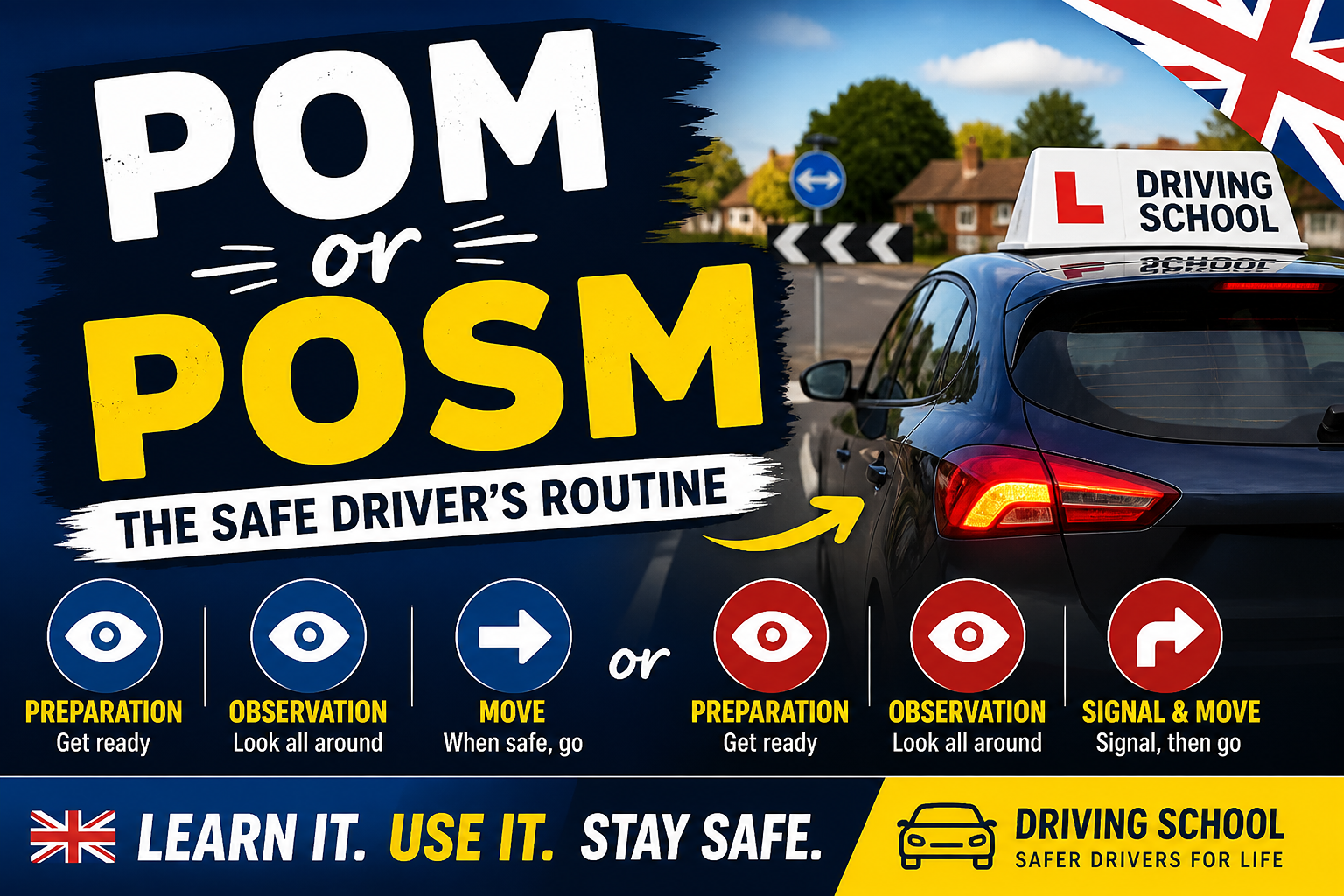
Moving away using POM or POSM
The Traditional Routine: POM
POM = Preparation → Observation → Move
This is what most learners are taught when moving off from the side of the road.
1. Preparation
Before the car moves, you prepare it:
Clutch down
Select first gear
Find the bite point
Set a little gas
You’re getting the car ready to go—nothing more, nothing less.
Preparation then Observation
2. Observation - Now you check it’s safe:
Centre mirror
Right mirror
Right blind spot
You’re asking one simple question: “Is it safe to move off?”
3. Move - If it’s safe:
Release the handbrake
Move off under control
Straightforward. Clean. Effective.

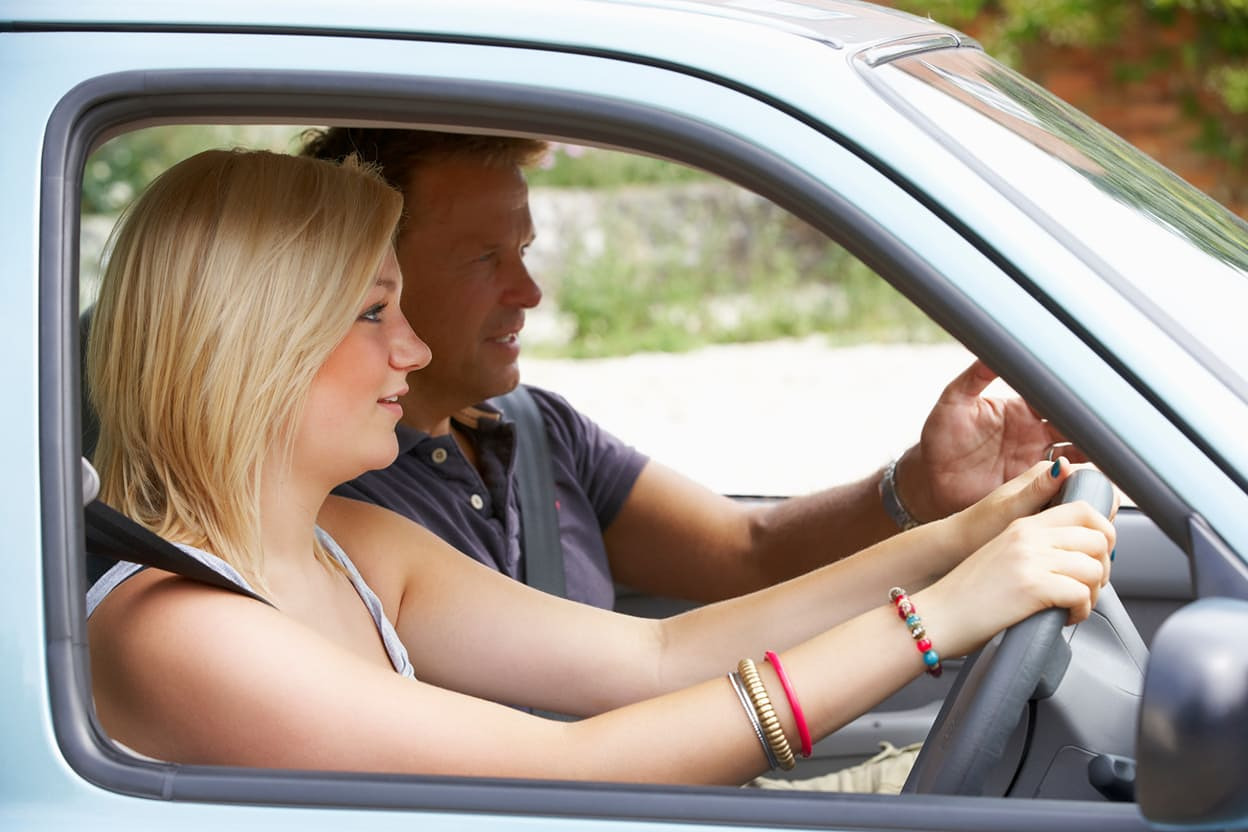
Why POM isn't always enough
Why POM Isn’t Always Enough
Here’s where things start to shift—especially from an instructor’s point of view.
POM works well when you’re not affecting anyone else.
But what if:
There’s traffic behind you?
A driver is approaching quickly?
You need to communicate your intention?
That’s where POM starts to fall short. Because driving isn’t just about what you do—
it’s about what others expect you to do.
POM or POSM
Introducing POSM (or POSSM)
To bridge that gap, many instructors use a slightly more complete routine:
POSM = Preparation → Observation → Signal → Move
(Some will refer to it as POSM, emphasising the signal stage—but the principle is the same.)
Breaking Down POSM Properly
1. Preparation
Exactly the same as before:
Clutch down
First gear selected
Bite point found
Gas set
No changes here.
Observations - SIGNAL
2. Observation
Your safety checks:
Centre mirror
Right mirror
Right blind spot
This is still about safety—but now it also informs your next decision.
3. Signal
Now comes the key addition.
If your movement could affect other road users, you signal:
Right indicator on
This tells others:
“I’m about to move off.”
And here’s the important teaching point:
You don’t signal out of habit.
You signal when it benefits someone else.
That’s a crucial distinction for ADI Part 3.
POM or POSM?
4. Move
Only when it’s safe:
Release the handbrake
Move away smoothly
Cancel the signal if needed
The Real Difference: Communication
The difference between POM and POSM isn’t mechanical—it’s awareness.
POM is about controlling the car
POSM is about interacting with the road
And that’s exactly what examiners are looking for.