Observations at Roundabouts
Full masterclass at www.adionline.co.uk
The first part of the roundabout observations is identifying there is a crossroad coming up
The second Observation is, If it is an open or closed junction -
So lets explore the 3rd - A roundabout is just a crossroads in disguise.
Strip away the circle, ignore the paint, and what are you left with?
A crossroads: Right - Ahead - Left
That’s it. Nothing fancy. Nothing mystical.
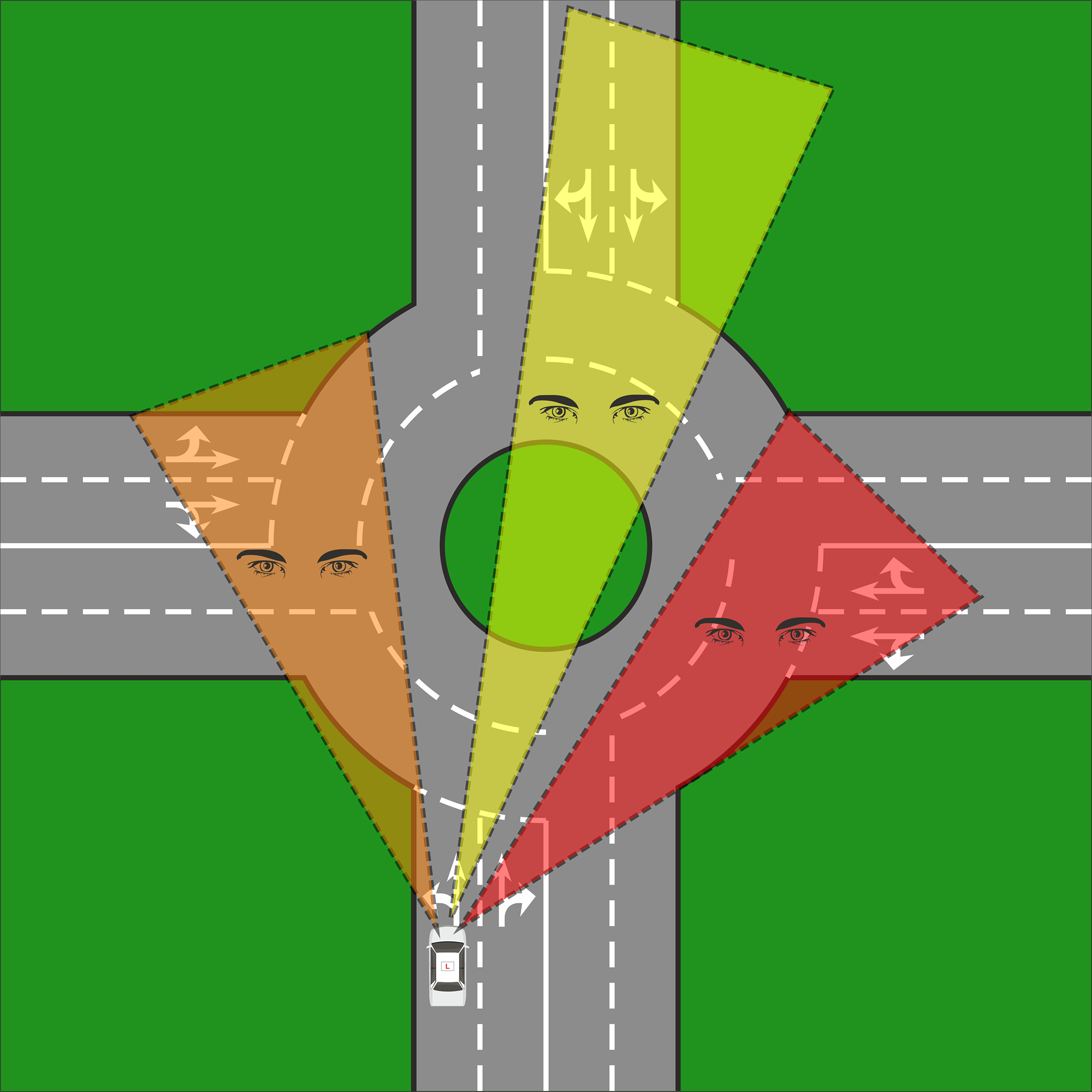
Where to look at roundabouts
Most learners go wrong because they focus on the shape of the roundabout instead of the decision they’re making.
So let’s simplify it.
Imagine you’re approaching a normal crossroads:
If you’re turning left, where are you looking?
If you’re going straight ahead, what are you checking?
If you’re turning right, what’s your priority?
Now bring that exact same thinking to a roundabout. Because the rules don’t change — only the road layout does.
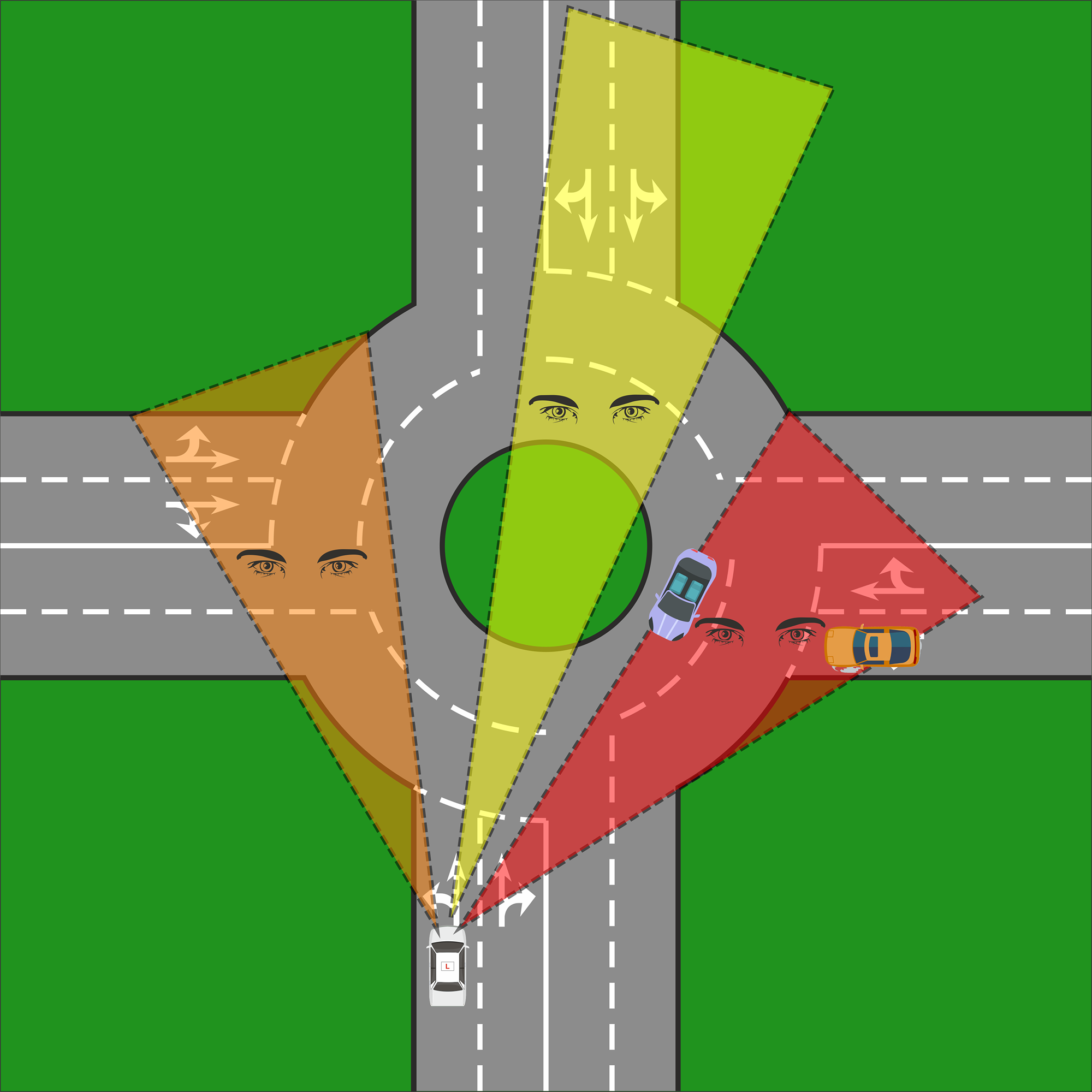
Roundabout Observations - Right
When approaching a roundabout, your observations should follow a clear, structured routine:
1. RIGHT (Primary Danger Zone)
This is your main priority.
At a crossroads, you give way to traffic coming from your right — and guess what? Same at a roundabout.
Before you even think about moving:
Is anything coming from the right?
Are they slowing?
Are they signalling?
Are they actually leaving… or just teasing you?
Key teaching point (ADI gold):
Not all signals are trustworthy — position and speed tell the real story.
Roundabout Observations - Ahead
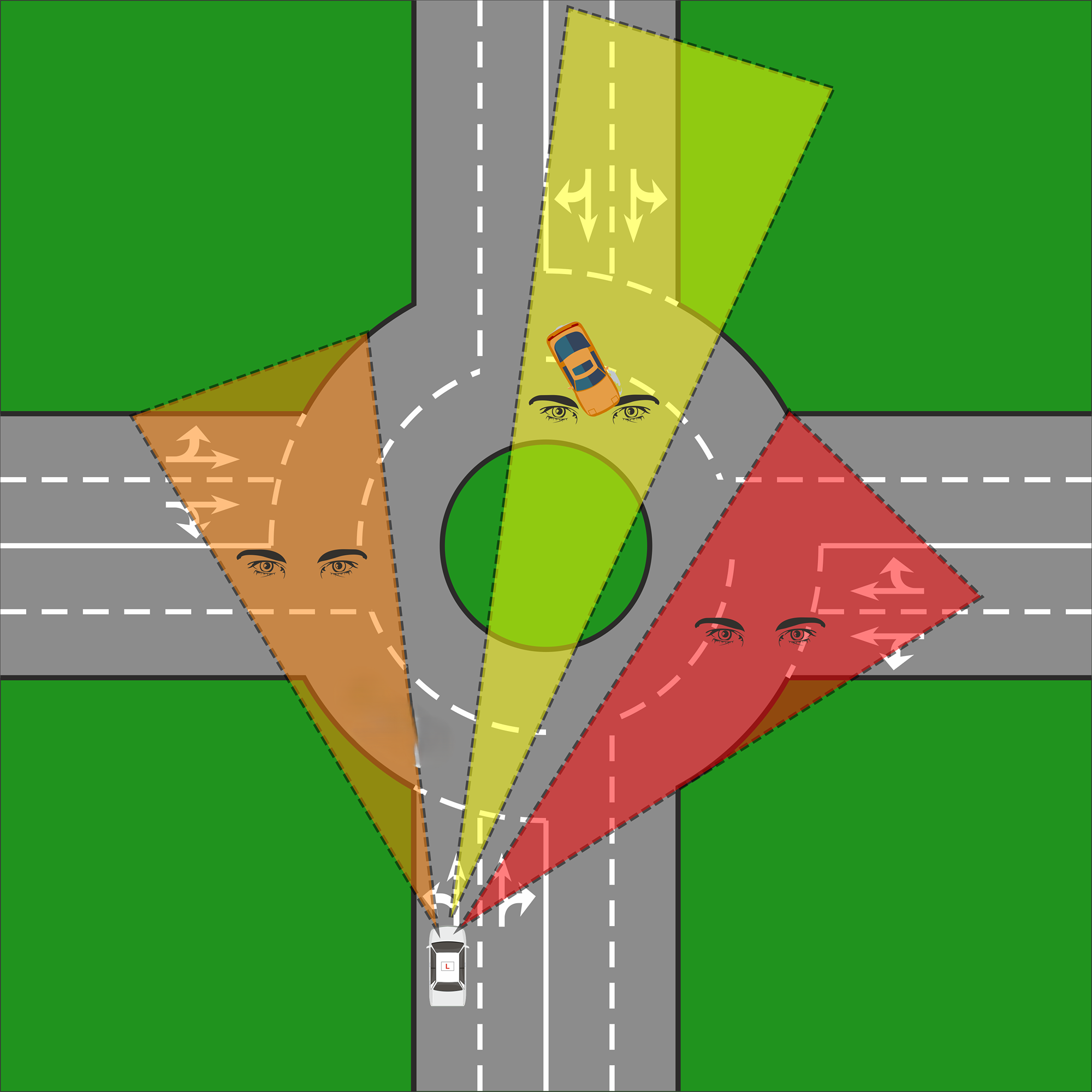
AHEAD (The Hidden Trap)
This is where many learners switch off — and it’s where problems creep in.
Think crossroads again. If someone is coming straight across from the opposite side… they can cross your path.
Same on a roundabout:
Vehicles opposite may go straight ahead
Or even turn right across you
Especially dangerous on:
Mini roundabouts - Unmarked roundabouts - Busy urban junctions
Simple rule:
If they can reach your path — they matter.
Roundabout Observations - Left
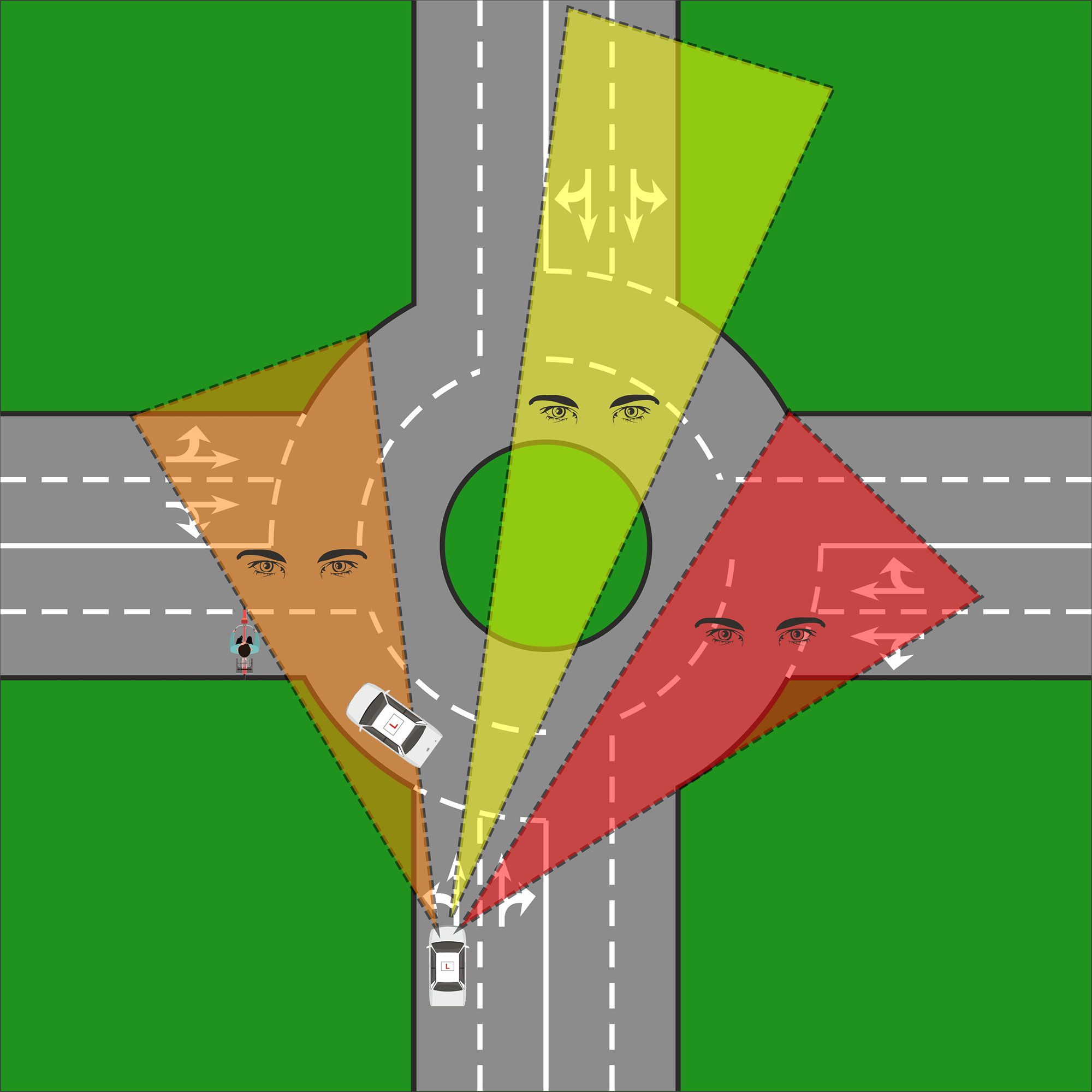
LEFT (Often Overlooked, Sometimes Critical)
Now we finish with the left.
At first glance, it feels safe — after all, traffic flows from the right.
But here’s the catch: Vehicles on your left might:
Be stationary in a queue of traffic
The car coming across from the right may not have cleared you
There could be people walking across
Cyclists may be crossing or about to
emergency vehicles may be aprroaching
On mini roundabouts especially, left-side awareness can be the difference between smooth progress and a near miss.
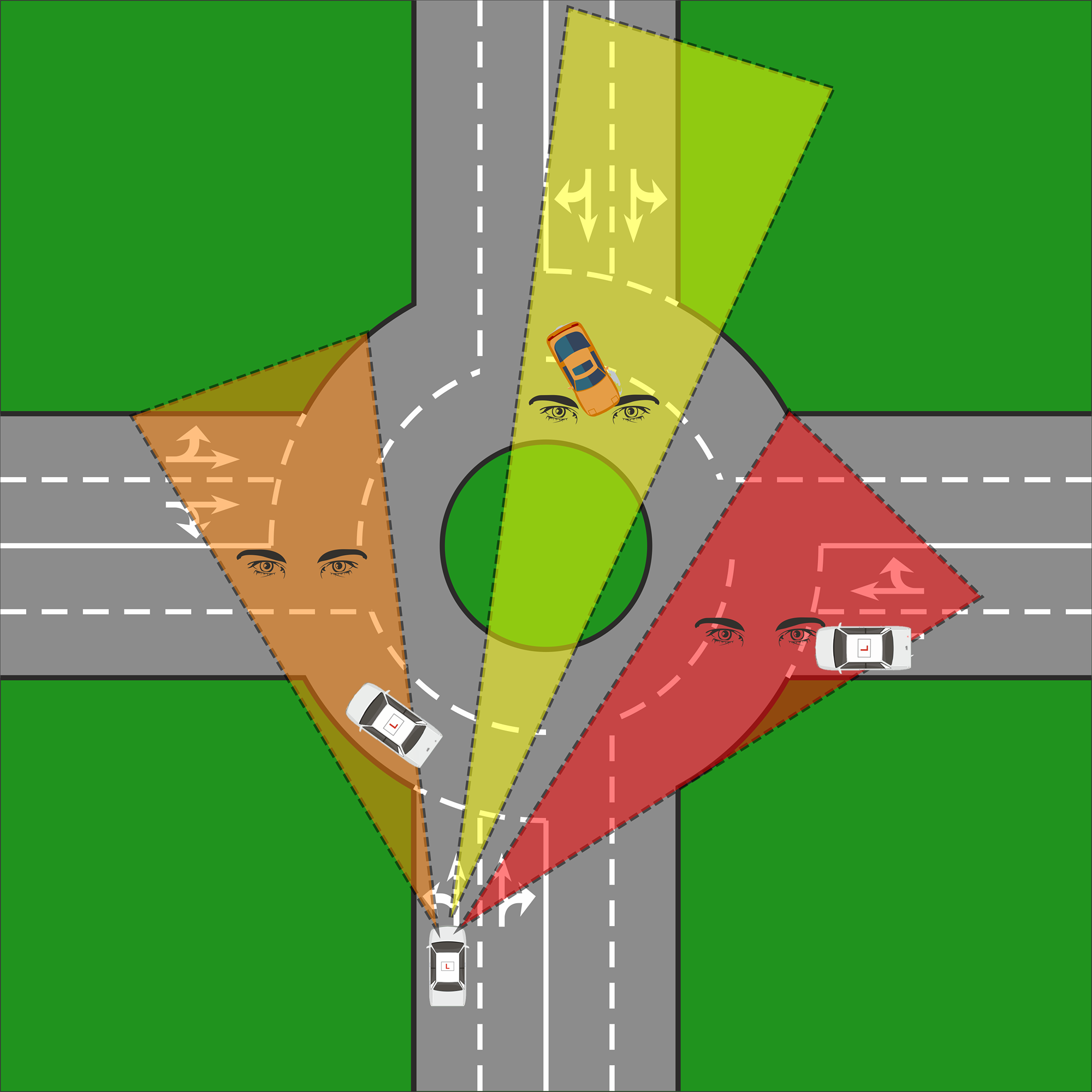
Roundabout Observations - Ahead and Right
Why Look Back AHEAD? Because traffic ahead can suddenly change its intention.
That vehicle opposite you:
Might have been slowing… then decides to go
Might not have been signalling clearly
Could move off at the same time as you
Especially on mini roundabouts or unmarked ones:
You can both commit at the same time — and meet in the middle.
Why Look Back to the RIGHT?
Why Look Back to the RIGHT?
Because the right is still your main danger — always. Even after your first check:
A vehicle may have been hidden (blocked view)
A “blocker” might move, releasing traffic
A driver may not have been indicating properly
A gap can disappear quickly
Classic learner mistake:
“It was clear a second ago…”
Yes — and now it isn’t.
That’s how most roundabout hesitations and interventions happen.
Observations at roundabouts
The Driving Test Angle (This Is Where People Slip Up)
On test, this is what the examiner is watching for:
❌ Moving off based on an earlier glance
❌ Missing a vehicle that’s appeared late
❌ Hesitating after committing
✔ Instead, they want to see:
A final glance to the right
Awareness of changing situations
A confident, well-timed decision
Test mistakes
The Classic Mistake (And How to Fix It)
Most learners:
❌ Stare only to the right
❌ Rush when they see a gap
❌ Ignore everything else
The result?
Poor judgement
Late reactions
Examiner intervention
The fix is simple:
Slow it down
Follow the sequence
Build a habit
Right → Ahead → Left → Ahead → Left
Every time.
Driving hasn’t changed as much as people think.
Yes, cars are smarter.
Yes, roads are busier.
But the fundamentals?
They’re rock solid.
And this is one of them.
If you can approach every roundabout like a crossroads — calmly, methodically, and with clear priorities — you won’t just pass your test…
You’ll drive like someone who truly understands the road.