Client Centred Learning Explained

Client Centred Learning Explained
The DVSA National Standard places great emphasis on this partnership. Client-centred learning is built around meaningful conversations where both instructor and learner contribute.
The learner is encouraged to think, reflect and evaluate, while the instructor listens carefully, asks effective questions and adapts the lesson to meet the learner's individual needs.
Why client centred learning is not done for ADI Part 3 training
MONEY! If you can get 20 or 30 trainees to pay £35 per hour, the trainer will make £700+ for the hour!
To do client centred learning means they train one person at a time so £35.
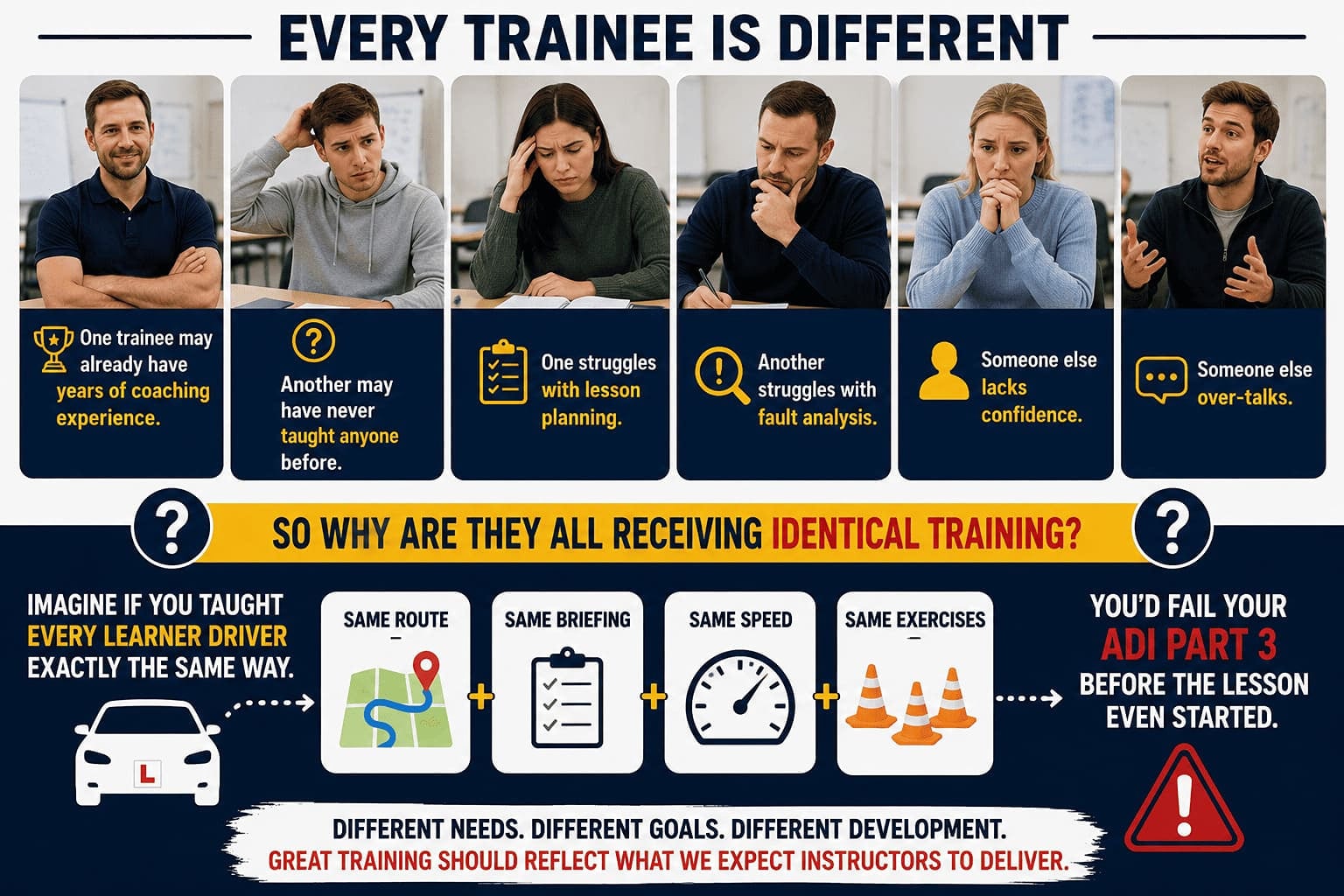
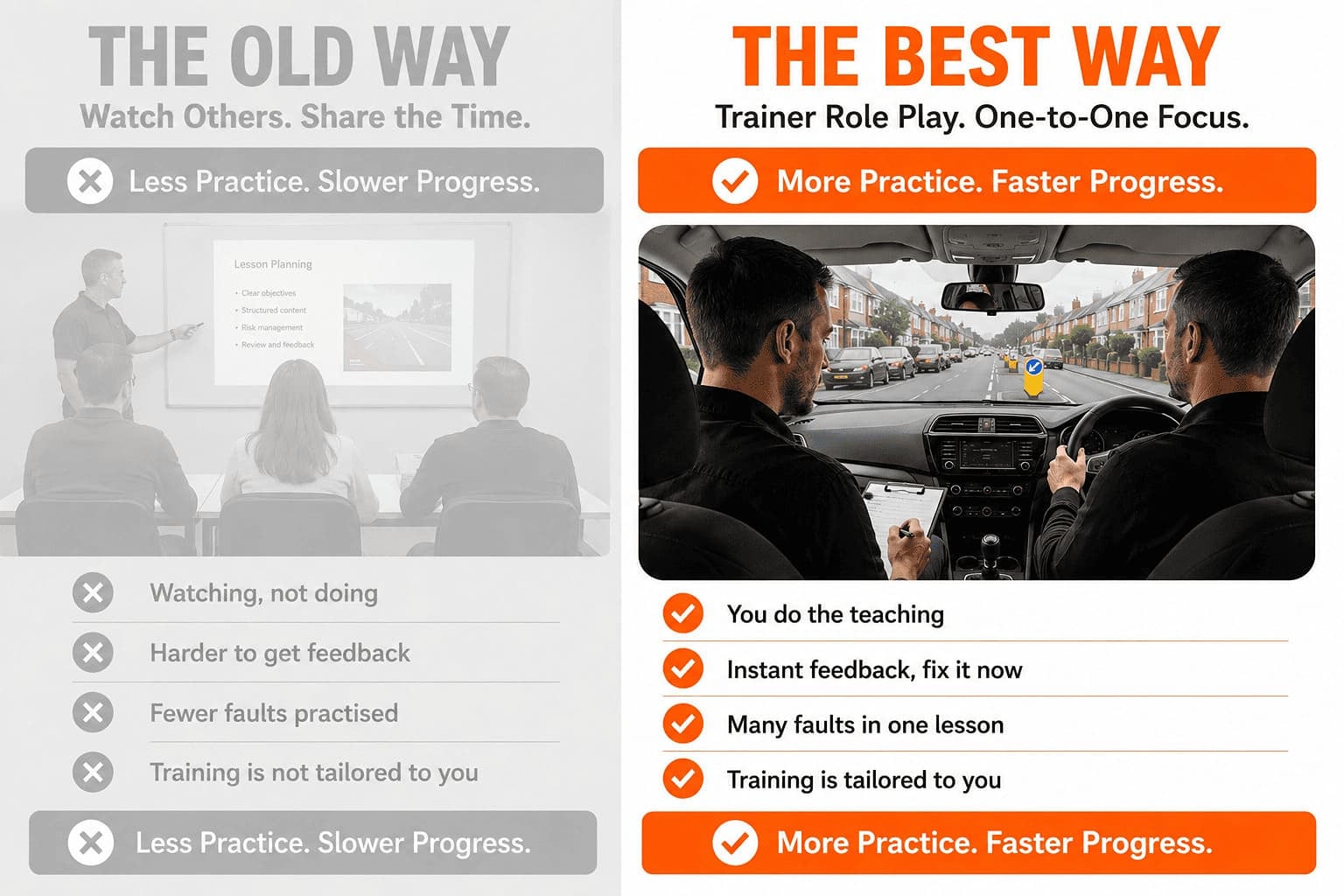
Client Centred Training
These conversations provide valuable insight into how each learner thinks, feels and processes information.
They help identify the learner's goals, strengths, weaknesses and preferred way of learning.
The more we understand the person sitting beside us, the better we can tailor our teaching to help them make safe, lasting progress.
The same should be true of you and your Part 3 training! You cant do that in a classroom setting!
Built on Trust and Respect
This approach works best when there is genuine trust and respect between instructor and learner.
By encouraging open discussion and valuing the learner's opinions, concerns and experiences, the instructor helps them become more involved in their own learning.
At the same time, responsibility for managing risk always remains shared, with the instructor maintaining overall responsibility for safety.


Client Centred means find out from them
One of the exercises we regularly use during ADI Part 3 training perfectly demonstrates the difference between simply giving information and helping someone learn.
Imagine asking the pupil "What's the speed limit on this road?"
They reply: "30 mph." then ask: " how do you know it's 30?"
they'll smile and say: "Because it's cloudy!"
They've given the correct answer, but they don't actually understand why it's correct.
Client Centred - Don't just tell
That's the key difference. If I simply tell them, "This road is 30 mph," they'll remember that particular road—perhaps. But have they learned anything they can use somewhere else? Probably not.
Client-centred learning goes much deeper than giving answers. It's about helping the trainee discover the reasoning behind the answer.
Instead, I might ask: "What clues can you see?" "What tells you this is a 30 mph limit?" "What would you expect to see if it was a national speed limit?"
Now they're analysing the environment, recognising the street lighting, looking for signs, and understanding the rules. They're building a process they can repeat anywhere.
This is exactly why some learner drivers become anxious when they're taken somewhere unfamiliar.
They'll often say: "I've never been down here before." "I don't know this roundabout." "I don't know what to do."


Understand Situations with Principles
The problem isn't that they don't know that road. The problem is they were taught to memorise roads instead of learning how to read roads.
The goal of client-centred learning is not to teach someone what to think. It's to teach them how to think. When learners understand the reasons behind their decisions, they can confidently apply that knowledge wherever they drive—not just on the roads they've practiced before.