From ADI Part 3 Trainee to Driving School Owner – Leonie’s Success Story

From worried ADI Part 3 Trainee to Running Her Own Driving School
There’s passing the ADI Part 3, and then there’s what happens afterwards.
We recently received a message from Leonie, a former trainee who came to us for help with her ADI Part 3 training. She’d spotted that she was still featured on our website from when she passed and got in touch to tell us what had happened since.
She’s now running her own driving school in Wrexham — Leonie Driver Training.
For us, that’s what ADI training should ultimately be about. Not simply getting somebody through a 45-minute test, but helping them develop the knowledge and teaching skills they’ll need when they’re out there doing the job for themselves.


But the bigger problem wasn’t simply the amount of time available. It was the way her previous training had been structured. Her training had largely followed a schedule.
Last lesson we covered this topic. This lesson we’ll cover the next one. Next week we’ll move on again.
On paper, that can look organised. The problem is that covering a subject and understanding a subject are two very different things.
If a trainee doesn’t properly understand roundabouts, moving on to dual carriageways because that happens to be next on the training schedule doesn’t solve the problem. If they don’t understand how to analyse a pupil’s fault, simply introducing another lesson topic doesn’t suddenly give them that skill.
Before moving on, somebody needs to establish:
What do you already know?
What don’t you understand?
Can you explain it?
Can you teach it?
Can you recognise when a pupil is struggling with it?
Can you analyse why the fault happened?
Can you help the pupil correct it?
That was the gap we needed to address.

We Went Back and Built the Knowledge First
Rather than simply carrying on through another predetermined list of Part 3 subjects, we concentrated on building the knowledge Leonie actually needed.
She started with our online training so that she could develop her understanding of the subjects in her own time.
That was followed by five hours of one-to-one Zoom training and 25 hours of in-car training. The important point is that each part had a purpose.
The online training helped build the underlying knowledge.
The Zoom sessions gave us an opportunity to question that knowledge, identify gaps and work through anything that wasn’t properly understood.
The in-car training was then about turning that knowledge into teaching ability. That distinction matters. You cannot reliably teach something you don’t understand yourself.
She Didn't Need a Trainee Licence
Leonie also made the decision not to go onto a trainee licence.
There is sometimes an assumption that you have to spend months teaching learners on a trainee licence before you can possibly be ready for the ADI Part 3.
Leonie's experience shows that isn't necessarily the case.
A trainee licence can be appropriate for some people, but it isn't a substitute for good training. The objective should be to develop the competencies required to teach effectively, not simply accumulate hours sitting in the passenger seat of a learner car.
Leonie concentrated on her training and preparation.
She then took her ADI Part 3 and passed first time.

And This Is the Bit We Really Like
A while later, this arrived:
“I noticed I’m still featured on your website from when I passed my Part 3 with you last year – which was actually really nice to see!
I’ve now got my own driving school up and running in Wrexham, Leonie Driver Training. Would you mind adding the business name and website link to my feature when you get a chance? It would be lovely for anyone reading my story to be able to see what I went on to do afterwards.
Thanks again for all your help getting me through Part 3 – it seems a long time ago now!”
That, for us, is the result that matters. She isn't an ADI Part 3 trainee anymore.
She isn't practising for an assessment or worrying about whether she's going to get through her final attempt.
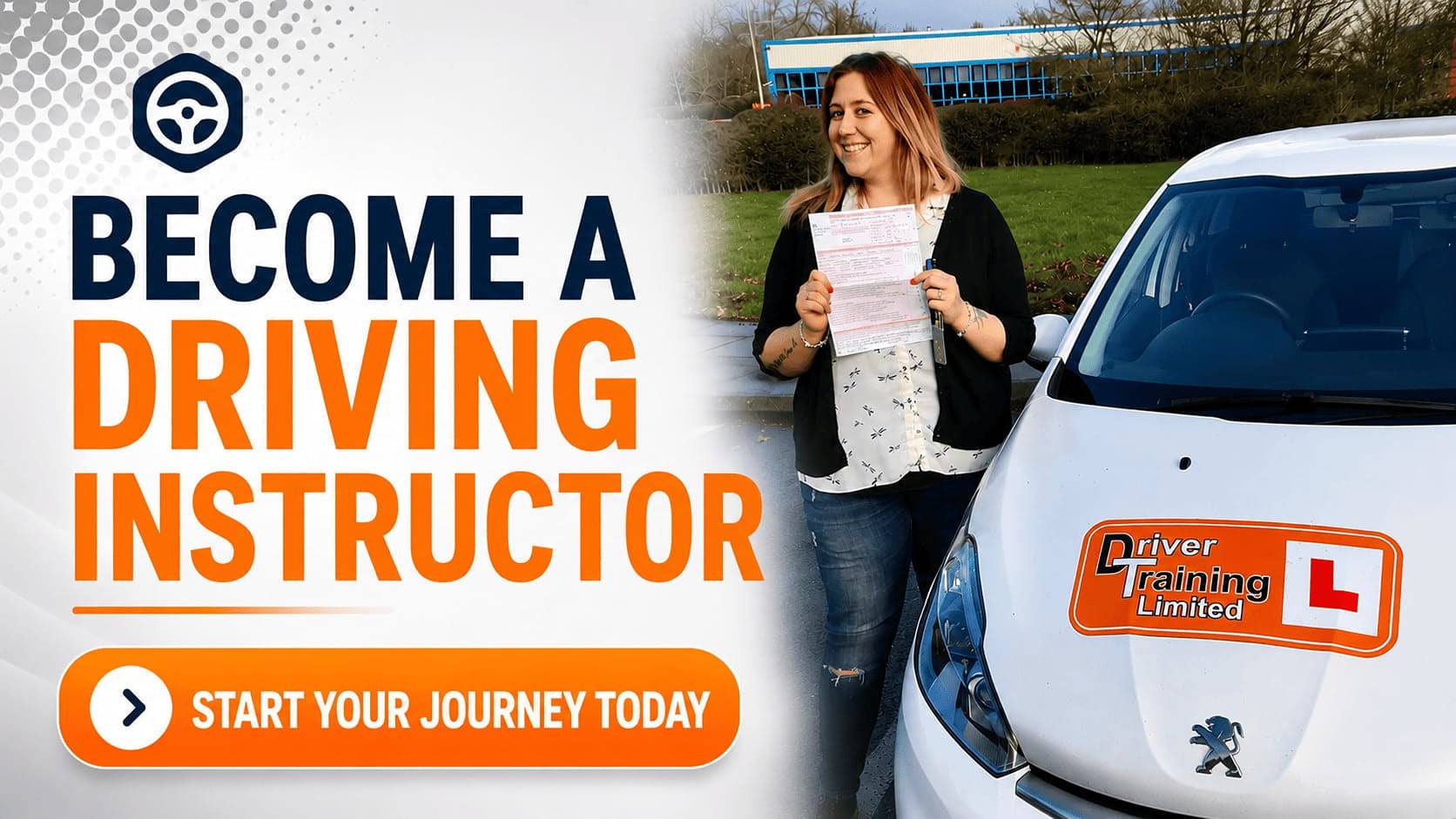
She's a qualified Approved Driving Instructor running Leonie Driver Training in Wrexham and teaching pupils of her own.
ADI Part 3 Training Shouldn't Be a Checklist of Subjects
Leonie's story highlights something we've believed for a long time.
Good ADI training should be based around the needs of the individual trainee.
Two people can be preparing for exactly the same ADI Part 3 test and require completely different training. One might have excellent subject knowledge but struggle to identify and analyse faults.
Another might communicate brilliantly but have gaps in their knowledge of road procedure.
Someone else may understand the theory perfectly but struggle to adapt their level of instruction between fully guided, prompted and independent practice.
Giving all three trainees exactly the same lesson simply because “that's what we're covering this week” makes very little sense. The starting point should always be:
What does this trainee need?
Then you build the training around the answer.
Knowledge First. Teaching Skills Second. Test Preparation Third.
The ADI Part 3 isn't about memorising a collection of briefings or copying how somebody else teaches a roundabout. You're being assessed on your ability to deliver a safe, effective, client-centred driving lesson.
That requires knowledge. It requires the ability to spot faults. It requires analysis. It requires you to understand why something is happening and then help the pupil develop a strategy to improve it.
That's why our training combines online learning, one-to-one coaching and practical in-car development rather than relying on one method alone.
Leonie came to us with limited time remaining and significant gaps in her knowledge. She completed the online training, five hours of Zoom coaching and 25 hours of in-car training. -----She passed her ADI Part 3 first time, without using a trainee licence.
And now? She's running her own driving school.
That's the outcome ADI training is supposed to lead to.
And we couldn't ask for a much better update than that.