What is Stopping Distance? Theory Questions Answered
Follow us on Youtube - Books - Online Courses
What Is Stopping Distance?
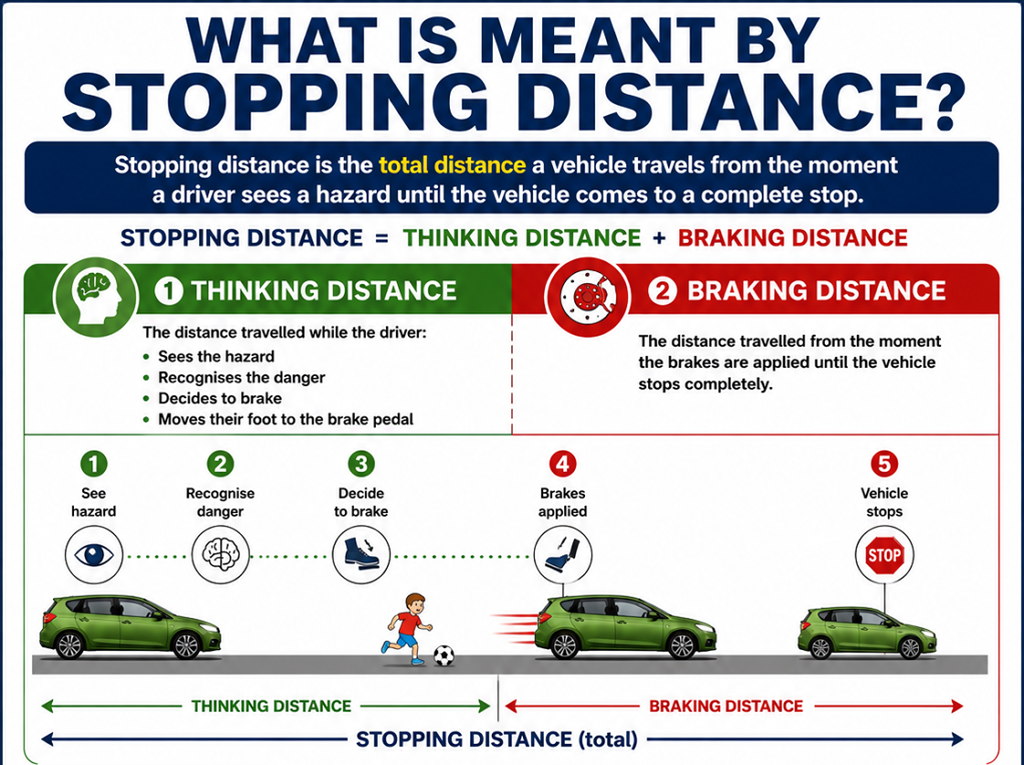
Stopping distance is the total distance a vehicle travels from the moment a driver recognises a hazard until the vehicle comes to a complete stop.
It consists of two separate parts:
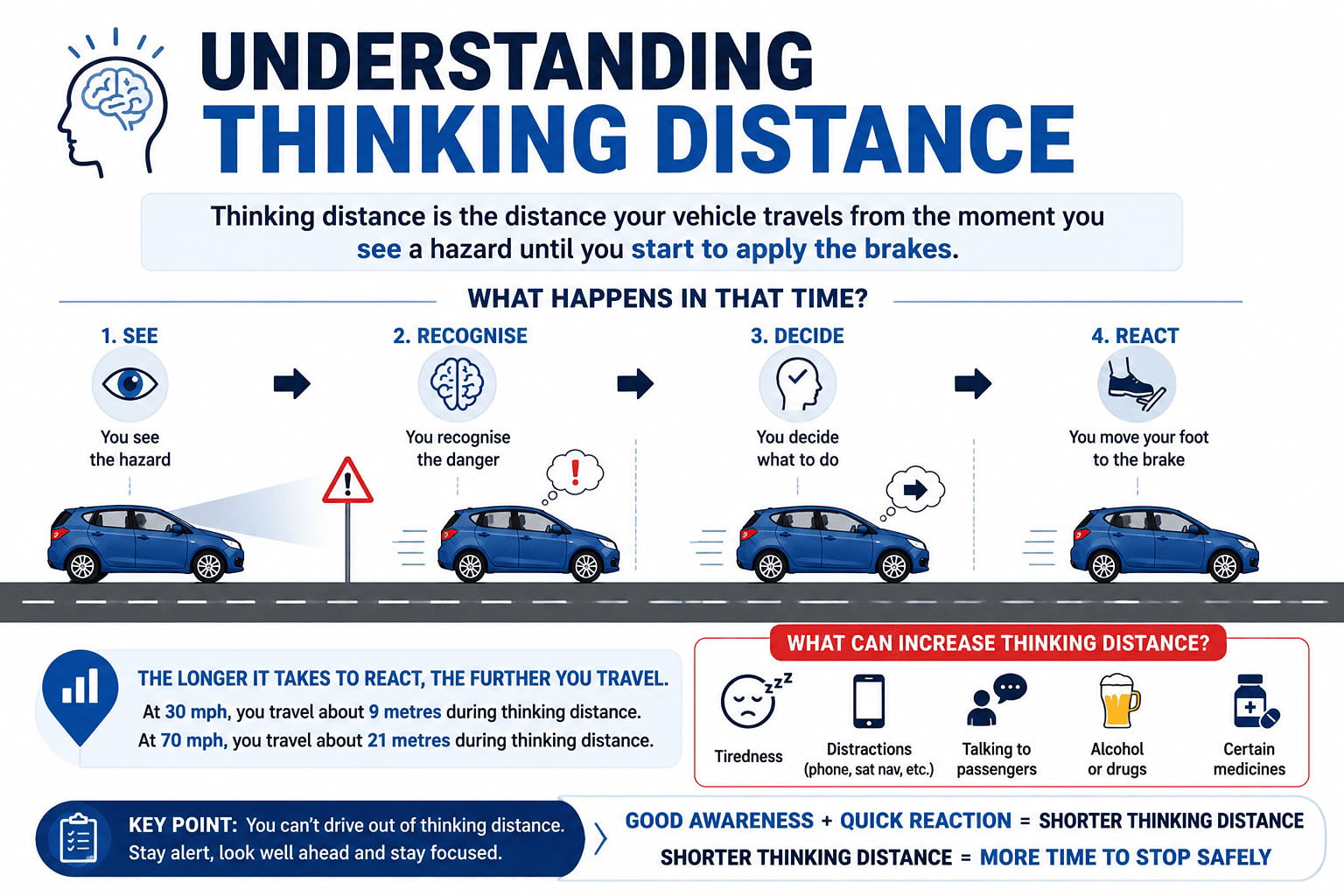
Thinking distance – the distance travelled while the driver sees the hazard, recognises the danger, decides to brake and moves their foot onto the brake pedal.
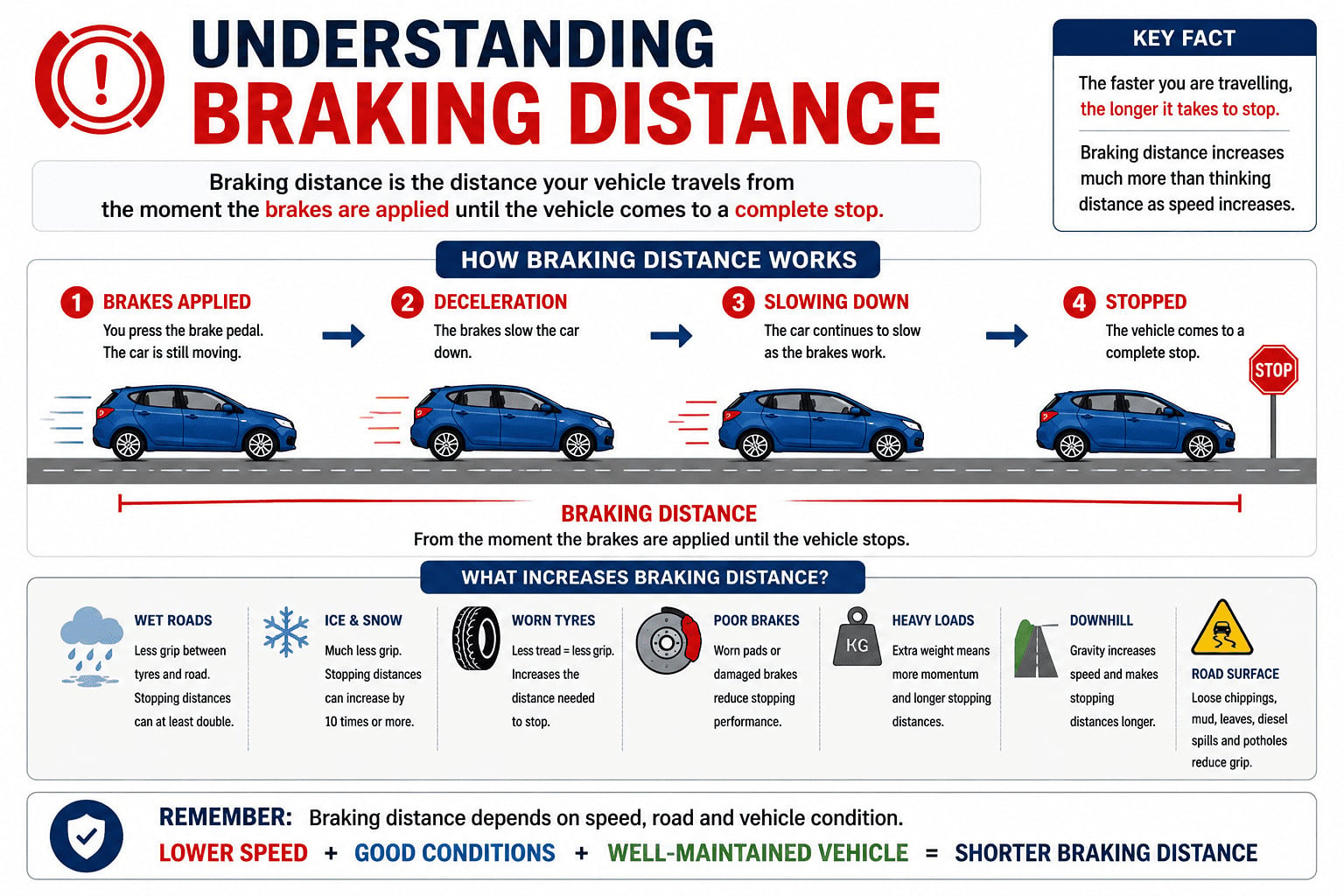
Braking distance – the distance travelled from the moment the brakes are applied until the vehicle stops completely.
Put simply: Stopping Distance = Thinking Distance + Braking Distance
Both parts are equally important. Even if your brakes are in perfect condition, you cannot avoid the time it takes your brain and body to react.
Why Doesn't a Car Stop Immediately?
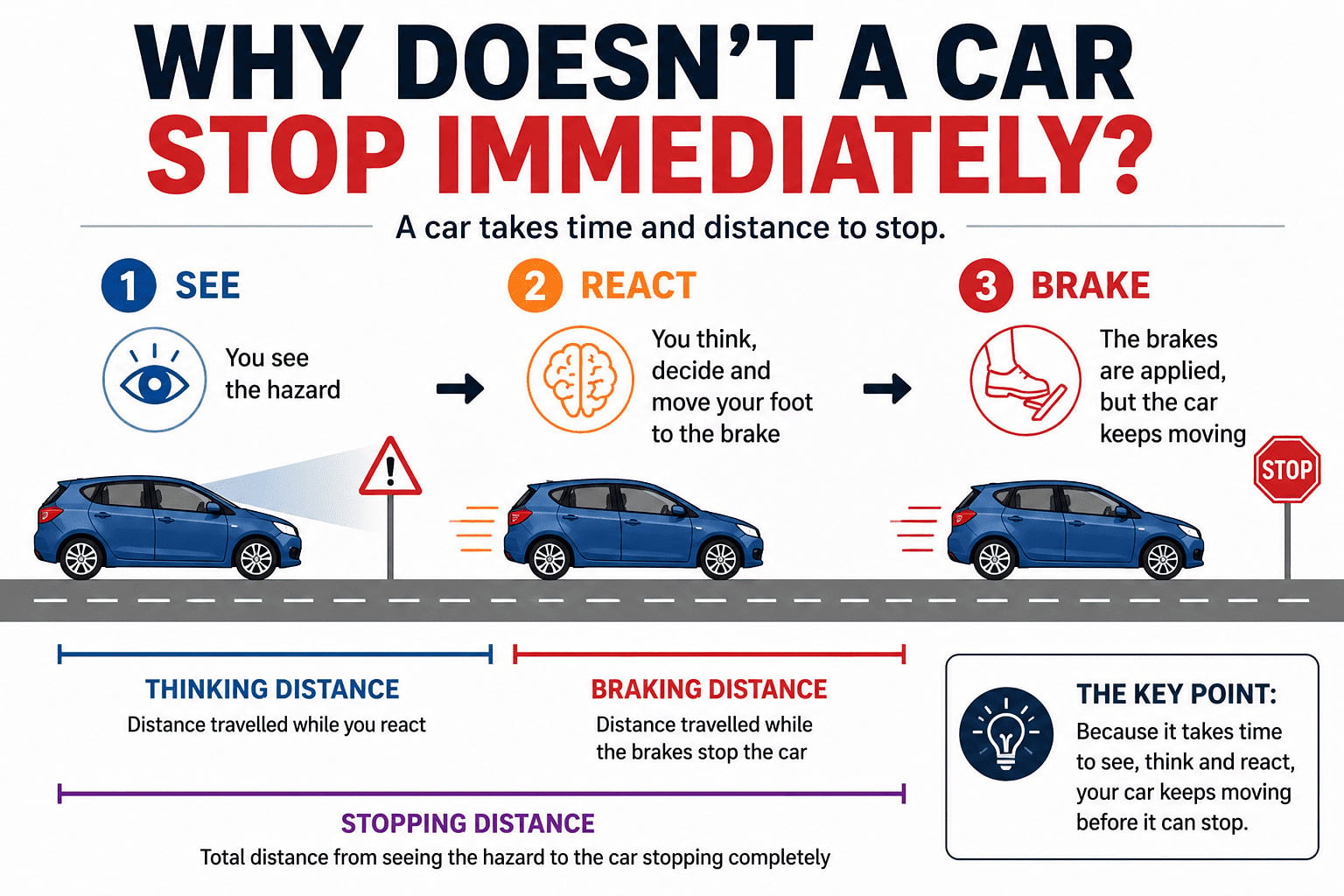
Why Doesn't a Car Stop Immediately?
Many people underestimate how quickly a vehicle covers ground.
Imagine you're travelling at 30 mph. You spot a child stepping into the road. Before you've even touched the brake pedal, your car has already travelled around 9 metres. Only then does braking begin, requiring another 14 metres to stop.
By the time your vehicle comes to rest, it has travelled 23 metres.
This illustrates why good observation and anticipation are essential. The earlier you recognise a hazard, the more time and distance you have to react safely.
Understanding Thinking Distance
Understanding Thinking Distance
Thinking distance is often overlooked because it happens in less than a second. During this brief moment your brain must:
Identify the hazard
Decide what action is needed
Move your foot from the accelerator to the brake
Begin applying pressure to the brake pedal
Although it seems instantaneous, your vehicle continues moving throughout the process.
Understanding Braking Distance
Understanding Braking Distance
Braking distance starts when the brakes are applied.
It depends on how quickly your tyres can grip the road and how efficiently your braking system slows the vehicle.
Unlike thinking distance, braking distance changes dramatically depending on road conditions.
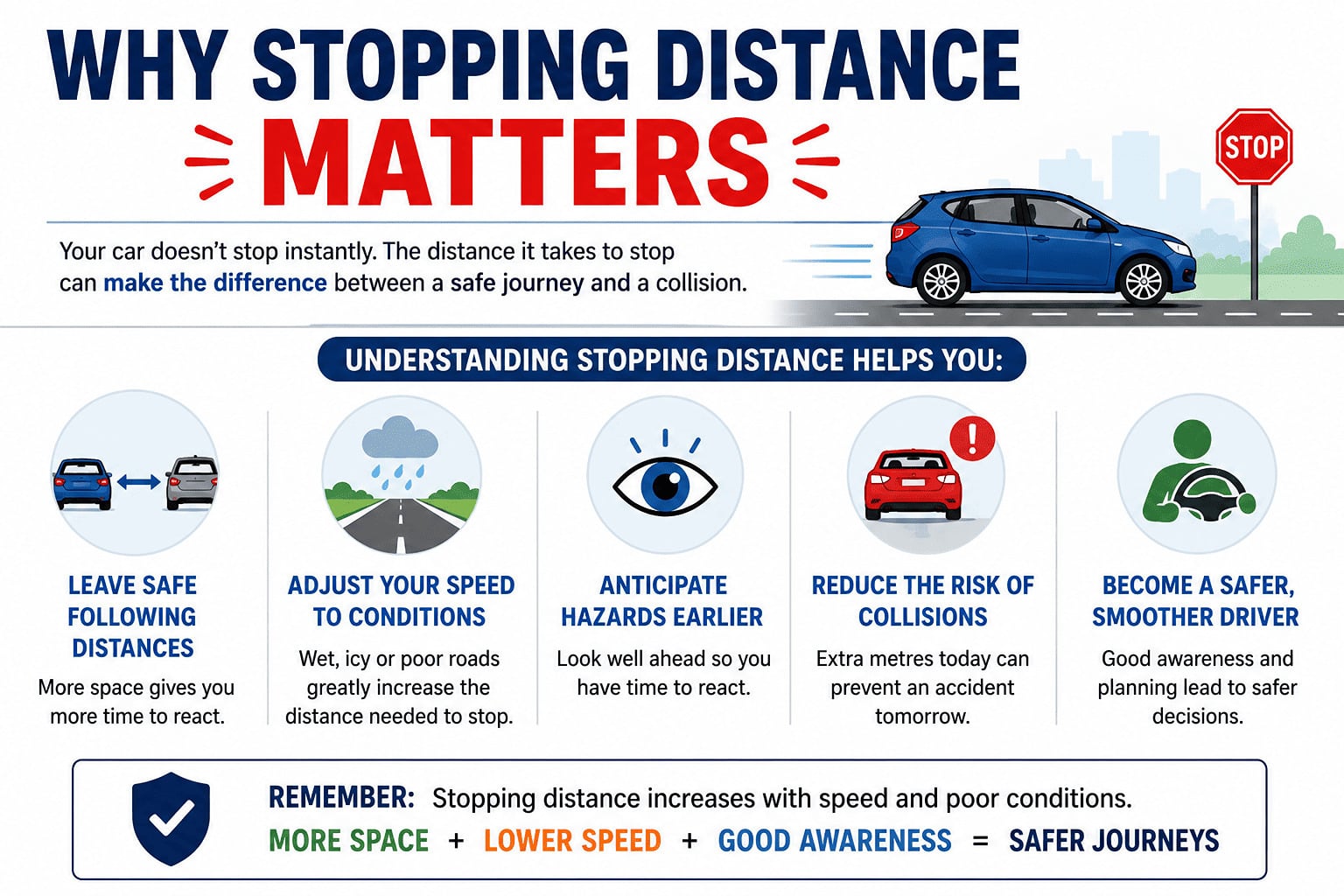
Why Stopping Distance Matters
Why Stopping Distance Matters
Understanding stopping distance helps you:
Leave safe following distances.
Adjust your speed for weather conditions.
Anticipate hazards earlier.
Reduce the risk of rear-end collisions.
Become a safer, smoother driver.
It's not just about passing the Theory Test. It's about making better decisions every time you drive.