What is a Puffin Crossing?
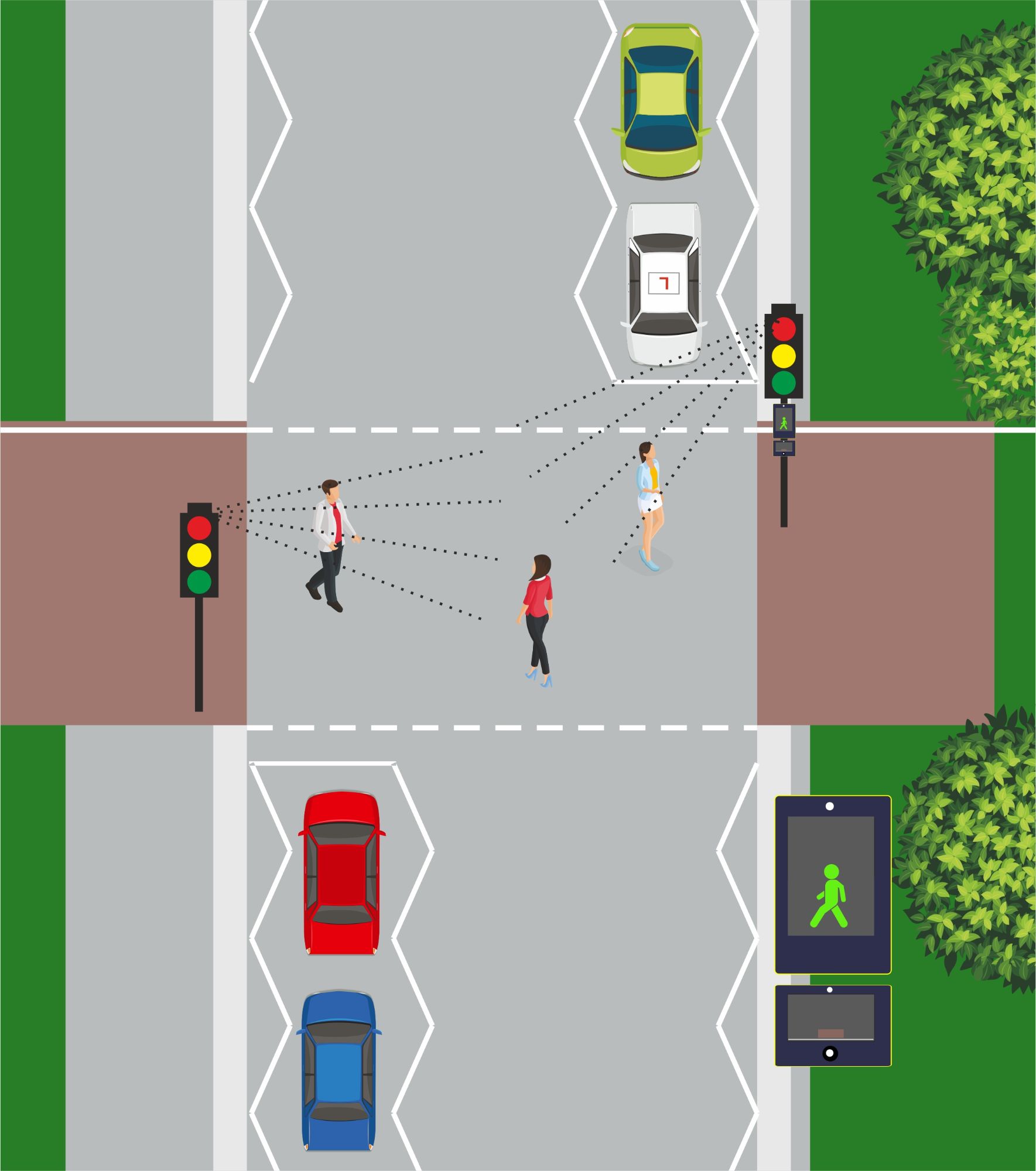
What Is a Puffin Crossing?
A puffin crossing is a type of pedestrian crossing controlled by traffic lights. Puffin stands for Pedestrian User-Friendly Intelligent crossing, and the important word is intelligent. Unlike older types of pedestrian crossing, a puffin crossing uses sensors to detect pedestrians and help control how the crossing operates.
For learner drivers, puffin crossings are important because they can look similar to other traffic-light-controlled crossings, but there are some key differences worth understanding. You may also be asked about them in the driving theory test.
How Does a Puffin Crossing Work?
When a pedestrian wants to cross, they press the button on the control box and wait for the green person to appear. However, the crossing does more than simply work on a fixed timer.
Sensors can detect whether somebody is still waiting to cross. If the pedestrian presses the button but then walks away or crosses before the pedestrian signal changes, the system may recognise that they are no longer waiting.
Other sensors monitor pedestrians while they are crossing. This means the crossing can allow additional time for someone who is taking longer to reach the other side, such as an elderly person, somebody with reduced mobility or a parent with young children.
Where Are the Red and Green Pedestrian Signals?
One of the easiest ways to recognise a puffin crossing is by looking at the pedestrian signals. On a traditional pelican crossing, the red and green pedestrian figures are normally positioned on the opposite side of the road. At a puffin crossing, the pedestrian display is normally positioned on the near side, close to the push button. This encourages pedestrians to look towards approaching traffic while they are waiting for the green signal.
What Should Drivers Do at a Puffin Crossing?
For drivers, a puffin crossing is controlled by the normal traffic-light sequence. If the lights are green, you may proceed provided it is safe to do so. If they change to amber, you should stop unless you have already crossed the stop line or are so close to it that stopping might cause a collision.
A red light means you MUST stop behind the stop line.
As with any pedestrian crossing, you should be looking well ahead and anticipating what pedestrians might do rather than simply concentrating on the traffic lights. Someone approaching the crossing may press the button, while children or distracted pedestrians may behave unpredictably.
Do Puffin Crossings Have a Flashing Amber Light?
No. This is an important difference between a puffin crossing and a traditional pelican crossing. A pelican crossing has a flashing amber phase for drivers. During this phase, drivers must give way to pedestrians who are still on the crossing but may proceed if the crossing is clear. A puffin crossing does not use the flashing amber phase. Its traffic lights follow the standard red, red-and-amber, green and amber sequence. This is a useful distinction to remember when preparing for the theory test.
Why Do Puffin Crossings Have Sensors?
The sensors make the crossing more responsive to the people actually using it. Imagine an elderly pedestrian begins crossing but takes longer than expected to reach the other side. Instead of relying entirely on a predetermined crossing time, the system can detect that a pedestrian is still on the crossing and provide the necessary time for them to finish crossing. The technology can also help prevent traffic being unnecessarily held at a red light when a pedestrian has pressed the button but is no longer waiting to cross.
Puffin Crossing vs Pelican Crossing
Although both crossings use traffic lights to stop vehicles and allow pedestrians to cross, there are several differences worth remembering. A puffin crossing uses pedestrian detection technology, normally has the pedestrian red and green figures on the near side and does not have a flashing amber phase for drivers. A pelican crossing traditionally has its pedestrian signals on the opposite side of the road and includes a flashing amber phase.
For learner drivers, the easiest clue is often the position of the pedestrian signal. If the red and green person is on the control box beside the pedestrian, you are likely looking at a puffin crossing.
What Should You Look for When Approaching a Puffin Crossing?
Don't wait until the traffic lights change before thinking about the crossing. Look at what is happening around it. Are pedestrians approaching? Is somebody waiting beside the push button? Are there children nearby? Is somebody already crossing? Could your view of a pedestrian be blocked by another vehicle? Spotting these clues early gives you more time to reduce your speed smoothly and stop safely if the lights change.
This is particularly important during a driving test because the examiner is not simply looking at whether you obey the red light. They will also expect you to demonstrate good awareness, planning and anticipation on the approach. Remember This for Your Theory Test
A simple way to remember a puffin crossing is:
Puffin = sensors + near-side pedestrian signals + no flashing amber for drivers.
If you understand those three features, you can usually distinguish a puffin crossing from a pelican crossing and answer theory-test questions about it with much more confidence.
Frequently Asked Questions
What does puffin crossing stand for?
PUFFIN stands for Pedestrian User-Friendly Intelligent crossing.
Does a puffin crossing have sensors?
Yes. Puffin crossings use sensors to detect pedestrians waiting at the crossing and pedestrians using the crossing.
Where is the green person on a puffin crossing?
The pedestrian red and green signals are normally positioned on the near side of the road, close to the pedestrian push button.
Does a puffin crossing have a flashing amber light? - No. Unlike a traditional pelican crossing, a puffin crossing does not have a flashing amber phase for drivers.
What is the main difference between a puffin and pelican crossing? - One of the main differences is that a puffin crossing uses sensors and normally has near-side pedestrian signals. A traditional pelican crossing has pedestrian signals on the opposite side and uses a flashing amber phase for drivers.