What is the stopping distance at 60 mph
Theory Help - Youtube - Books
What is the stopping Distance at 60 mph
What Is the Stopping Distance at 60 mph?
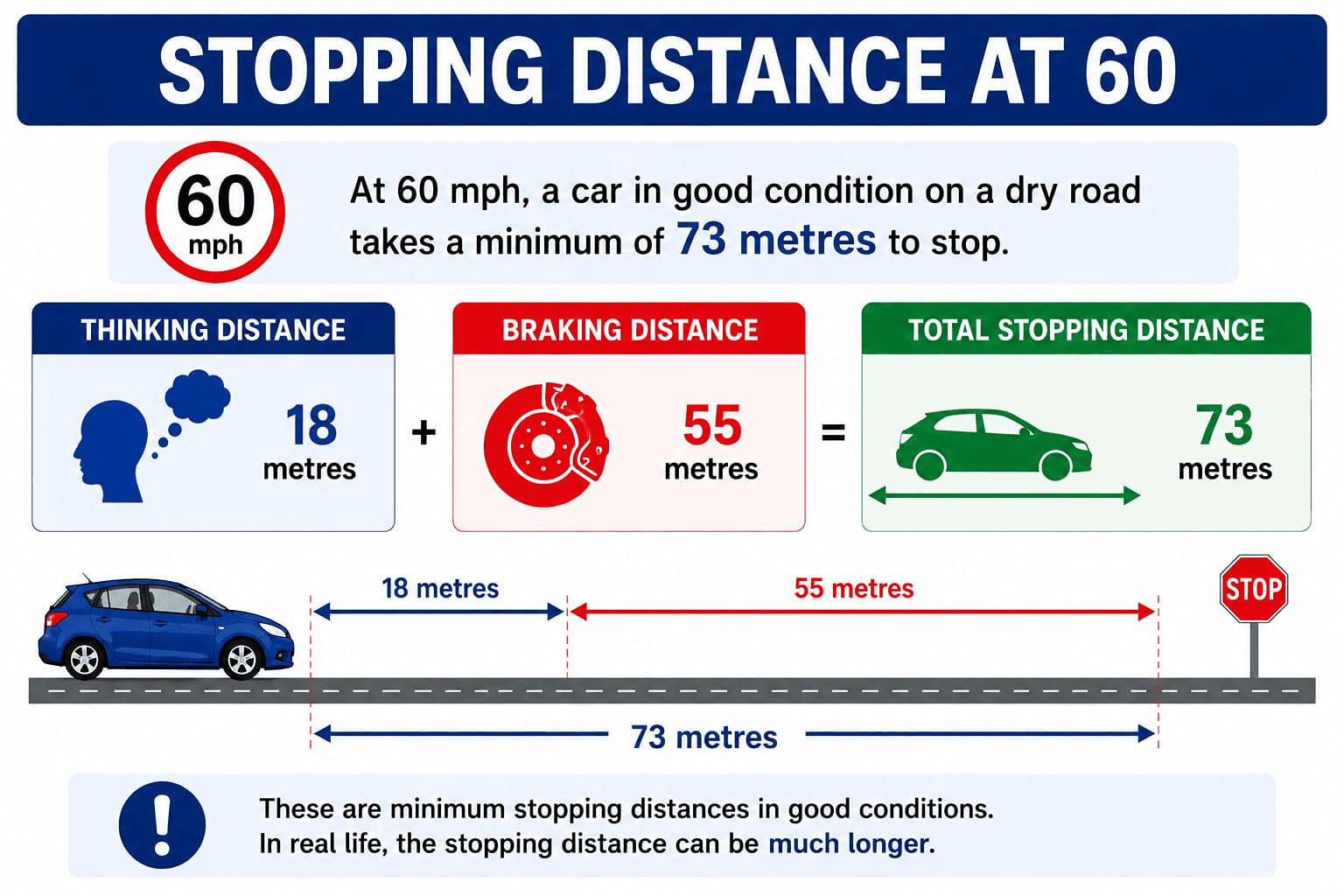
If you're travelling at 60 mph, the official Highway Code stopping distance is 73 metres. That combines:
Thinking distance: 18 metres
Braking distance: 55 metres
Total stopping distance: 73 metres
These figures assume you're driving a well-maintained vehicle on a dry road, with good tyres and brakes, and that you're alert and react promptly.
How Far Is 73 Metres?
How Far Is 73 Metres?
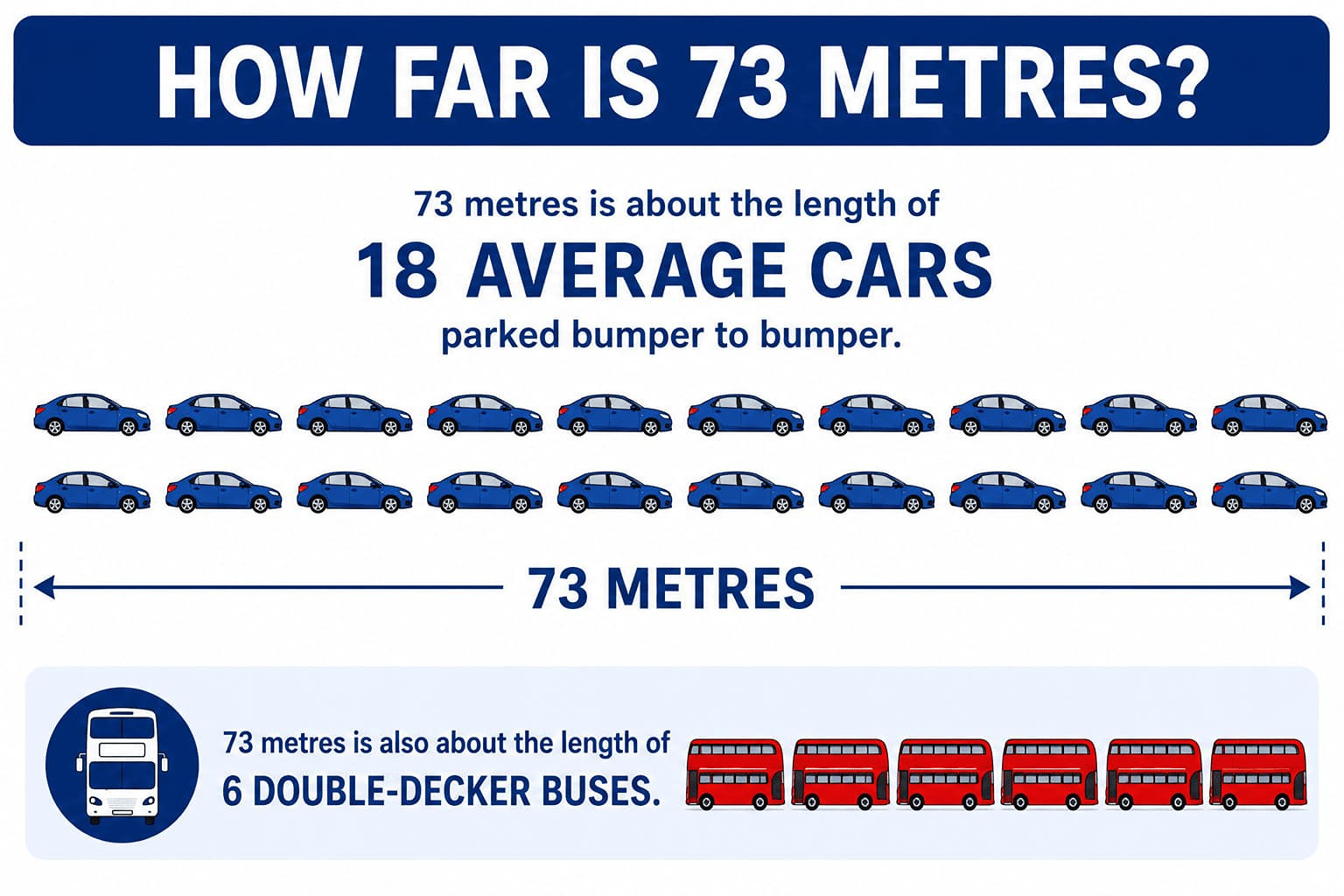
Seventy-three metres is much farther than most drivers imagine. It's roughly:
About the length of 18 average family cars parked bumper to bumper.
Around the length of 6 double-decker buses.
At 60 mph, your vehicle covers a lot of ground in just a few seconds. Even if you react quickly, it still takes a considerable distance to bring the car safely to a halt.

Why Is the Stopping Distance So Much Longer?
Why Is the Stopping Distance So Much Longer?
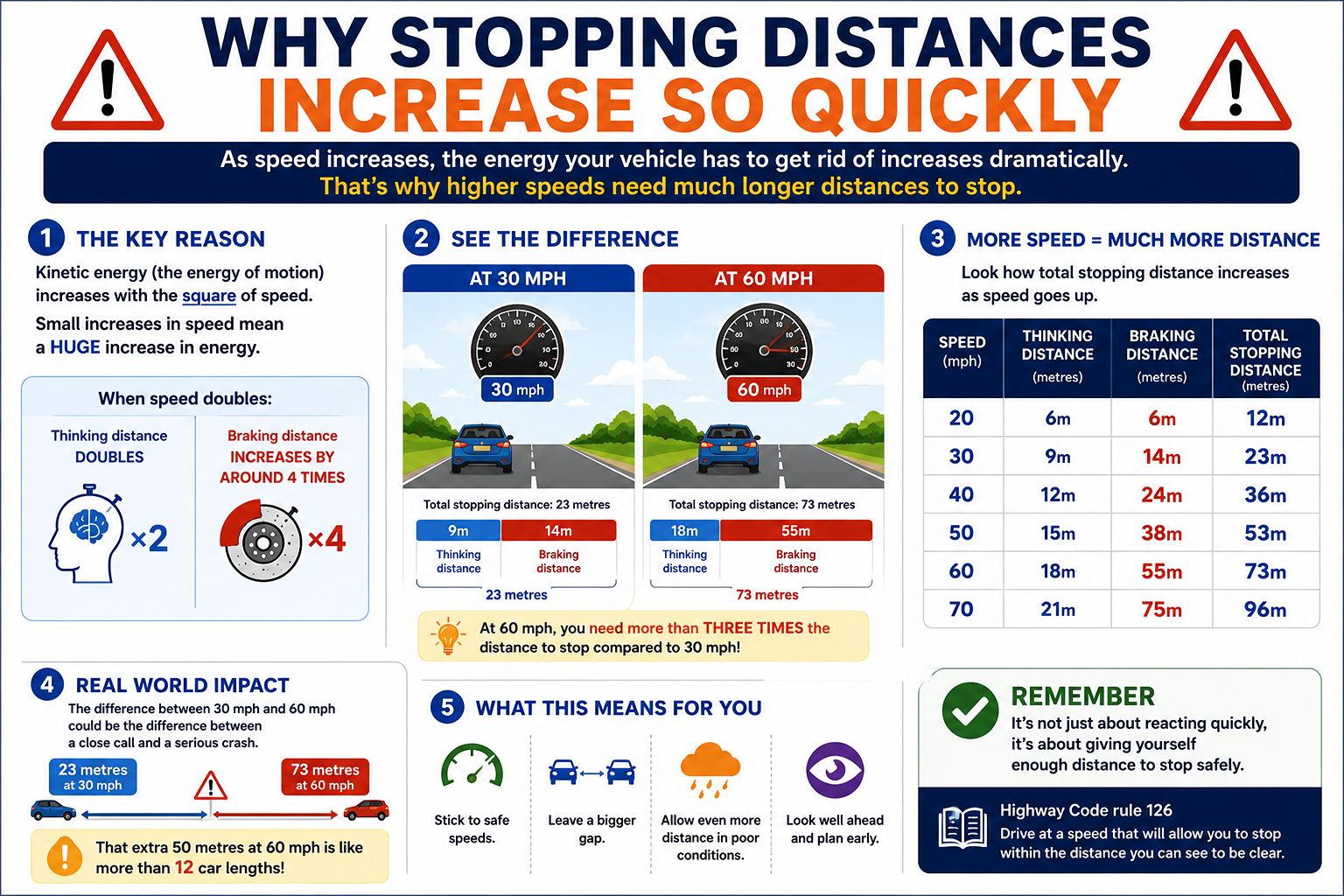
Many people assume that doubling your speed simply doubles your stopping distance. In reality, it increases by much more.
While your thinking distance increases steadily with speed, your braking distance rises dramatically because your brakes have much more energy to absorb. At 60 mph, the braking distance alone is 55 metres—more than three times your thinking distance.
That's why higher speeds leave much less room for error.
When Can It Be Longer?
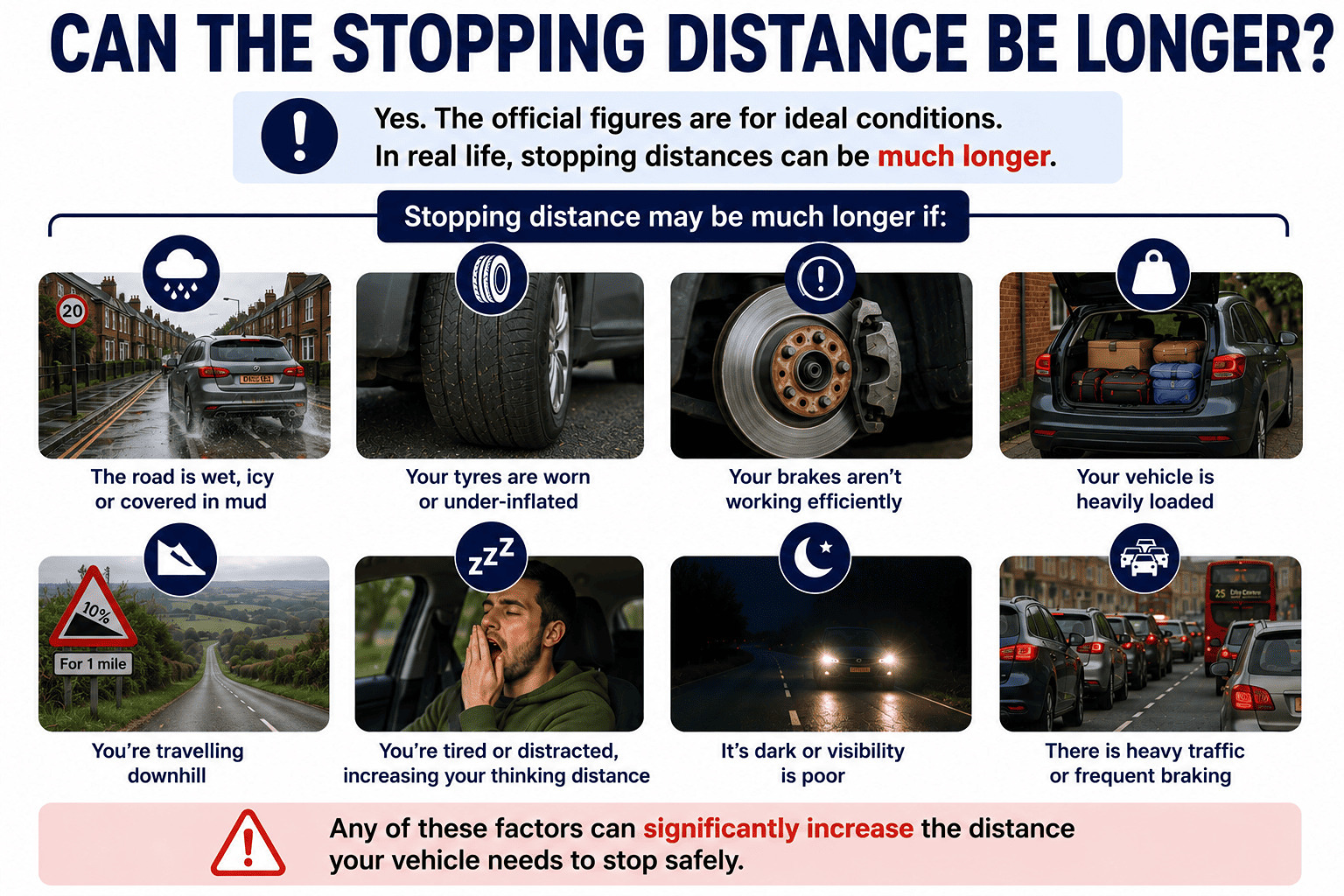
The Highway Code figures are minimum stopping distances in ideal conditions. In everyday driving, you may need much more than 73 metres if:
The road is wet or icy.
Your tyres are worn or under-inflated.
Your brakes aren't working efficiently.
Your vehicle is heavily loaded.
You're travelling downhill.
You're tired, distracted or slow to react.
In poor conditions, the distance needed to stop can increase significantly.
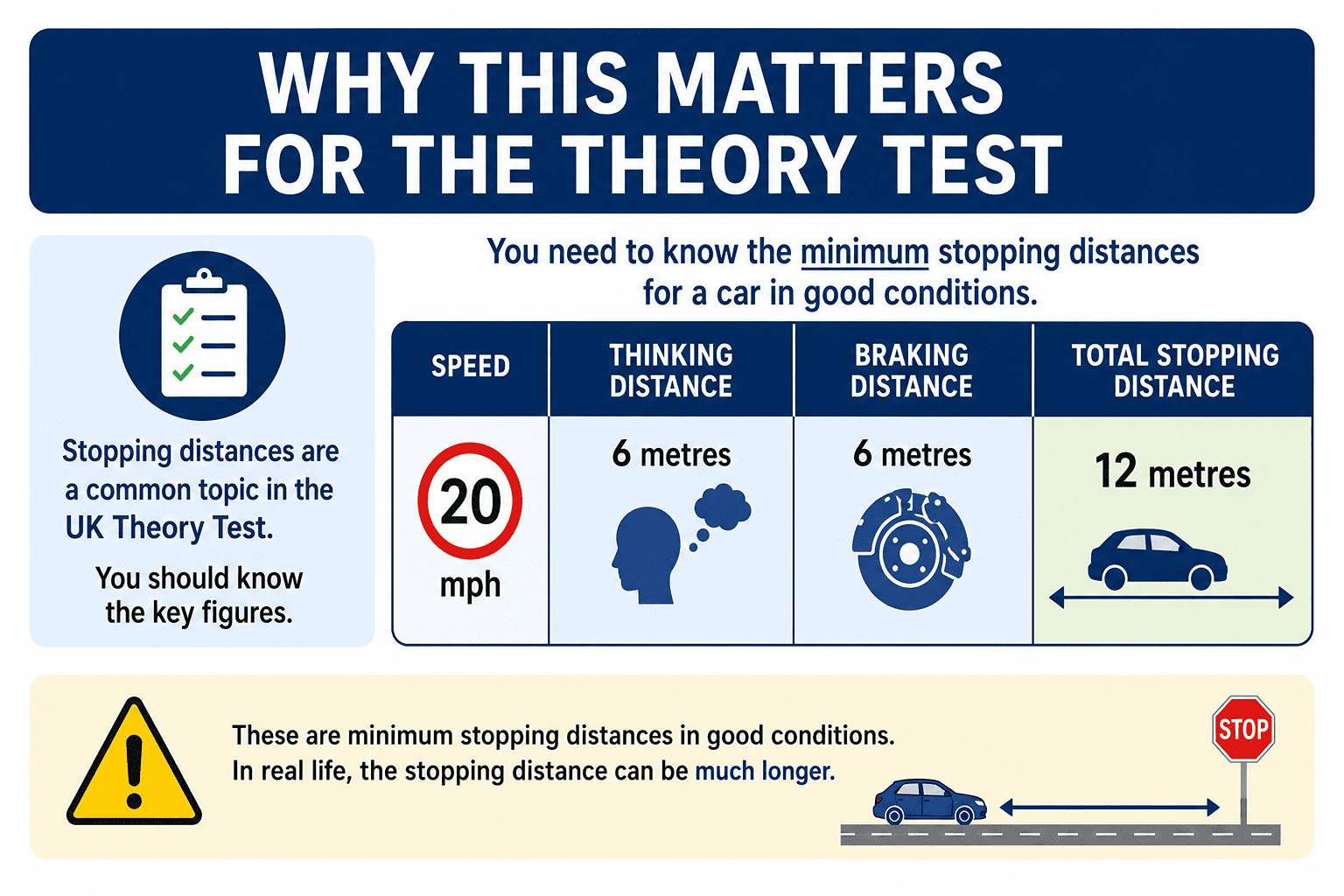
Why This Matters
Sixty miles per hour is the national speed limit on many single carriageway roads, where you may encounter bends, junctions, farm traffic, cyclists and pedestrians.
Knowing that it takes 73 metres to stop helps explain why leaving a safe following distance is so important. If the vehicle ahead brakes suddenly, having enough space gives you the time and distance needed to react safely.
At 60 mph, the official stopping distance is 73 metres. That's the equivalent of around 18 family cars or 6 double-decker buses lined up end to end. It's a reminder that at higher speeds, even a moment's delay or poor road conditions can make a huge difference to your ability to stop safely.